7 Benefits of Motorised Blinds for Commercial Buildings
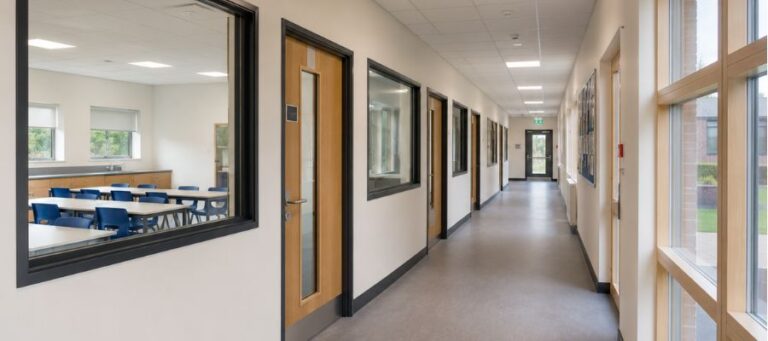
Motorised blinds give you a practical way to control solar shading across large, high-level or frequently used glazing.
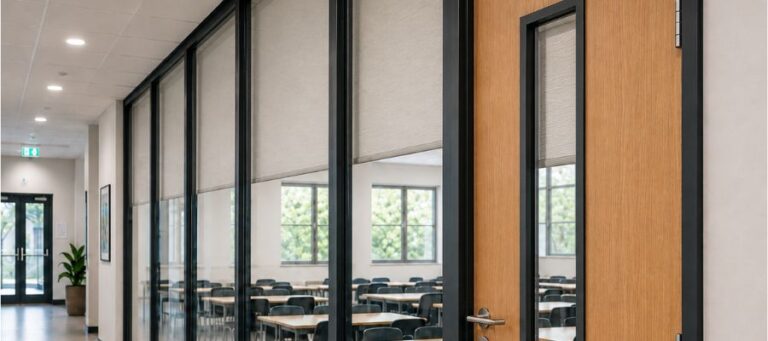
Electric operation can make individual blinds easier to use, while grouped controls allow several blinds to move together across a room, façade or larger building.
Add sensors, schedules or building controls and the same blinds can respond automatically to changing conditions.
For architects, designers, contractors and facilities teams, this can help manage glare, daylight and solar gain while solving practical problems around access and operation.
In this guide, we look at seven key benefits of motorised blinds, where automation can take them further and what you should consider when specifying a system.
What are motorised blinds?
Motorised blinds use an electric motor to open, close or position the blind instead of relying on a manual chain, cord or crank.
Depending on the system, you can operate them using a wall switch, remote control or central controller.
Multiple blinds can also be grouped so they operate together, making motorisation particularly useful for offices, schools, healthcare environments, residential developments, rooflights and large glazed areas.
Motorisation can be applied to different blind systems, including roller blinds, rooflight blinds and specialist large-format installations.
The motor and controls need to be selected around factors such as blind size, weight, location, access and how you want the blinds to operate.
Motorised vs automated blinds
Motorised and automated blinds use electric motors, but the level of control is different.
A motorised blind moves when you give it a command, such as pressing a wall switch, remote control or central control panel.
An automated blind system can also respond to programmed instructions or information from other building systems. Depending on the specification, this could include timers, sunlight sensors, temperature inputs or a Building Management System (BMS).
Automation can allow blinds to operate according to the time of day, solar conditions or requirements across different rooms and façades.
This becomes particularly useful on larger projects where manually adjusting individual blinds throughout the day would be impractical.
Explore motorised blind solutions
If you already know the type of blind or control system your project requires, you can explore our main motorised blind products and related specification options below.

Motorised Blind Systems
Motorised blind systems for commercial buildings, from single electric blinds to grouped and automated solutions for larger projects and shared spaces.

Sonata Roller Blinds
A versatile roller blind system with a wide choice of fabrics, operating methods and configurations, including motorised control.
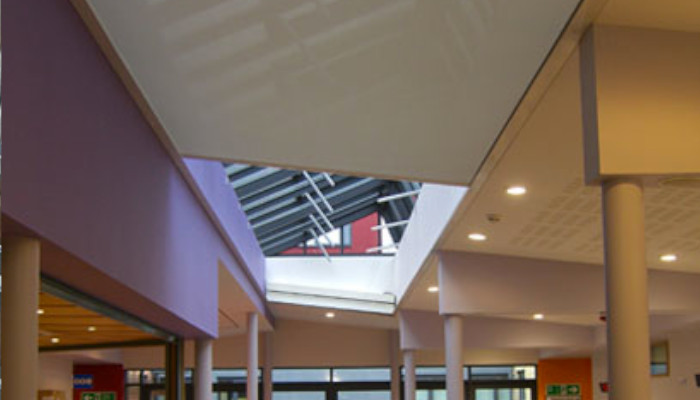
Rooflight Blind Systems
Motorised shading for horizontal, sloping and hard-to-reach glazing, designed around the size, shape and access requirements of the opening.

Concealed Blind Boxes
Bespoke blind boxes for integrating roller blinds discreetly into ceilings and architectural details, with systems designed around each opening.

Cassette Blind Systems
Contained blind systems that provide a clean architectural finish while enclosing the roller, fabric and operating components within the cassette.

BMS Blind Integration
Connect motorised blinds with wider building controls using schedules, sensors, zoning and compatible interfaces for coordinated automated shading.
Manual vs motorised vs automated blinds
The right level of control depends on the number of blinds, their location and how you need them to operate.
|
Manual blinds |
Motorised blinds |
Automated blinds |
|
|---|---|---|---|
|
Operation |
Chain, cord, crank or other manual control |
Electric motor operated by switch, remote or controller |
Electric motor operated through programmed or responsive controls |
|
Group control |
Limited |
Multiple blinds can operate together |
Multiple blinds can operate together by room, zone or façade |
|
Scheduled operation |
No |
Available with suitable controls |
Can form part of the control strategy |
|
Sensor response |
No |
Available with suitable controls |
Can respond automatically to inputs such as sunlight |
|
BMS integration |
No |
Possible with compatible controls |
Suitable for integration with wider building controls |
|
High-level glazing |
Can be difficult to operate |
Well suited |
Well suited |
|
User input required |
Every adjustment |
When movement is required |
Depends on how the system is programmed |
Manual blinds can work well where windows are easy to reach and only need occasional adjustment.
Motorisation becomes more useful as blinds become larger, harder to access or more numerous.
Automation adds schedules, sensors or wider building controls, allowing shading to respond without relying on regular manual adjustment.
Available functions depend on the blind system, motor, controls and building infrastructure.

1. Operate large and inaccessible blinds more easily
Some windows are simply difficult to shade manually.
Rooflights, atriums, high-level glazing and very large windows can place the blind well beyond convenient reach.
Large blinds can also require more controlled operation because of their dimensions and weight.
Motorisation allows these blinds to be operated from an accessible switch, remote control or central controller.
This gives you practical control over glazing that might otherwise be difficult to manage day to day.
It also opens up possibilities for much larger bespoke shading systems.
One example is a system we designed for an NHS surgery in Edmonton. The building featured a large rooflight that required a 16-metre electric blind, one of the longest blinds we have produced.
Motorised operation allowed this unusually large shading system to work within the architectural design while providing practical control over the rooflight.
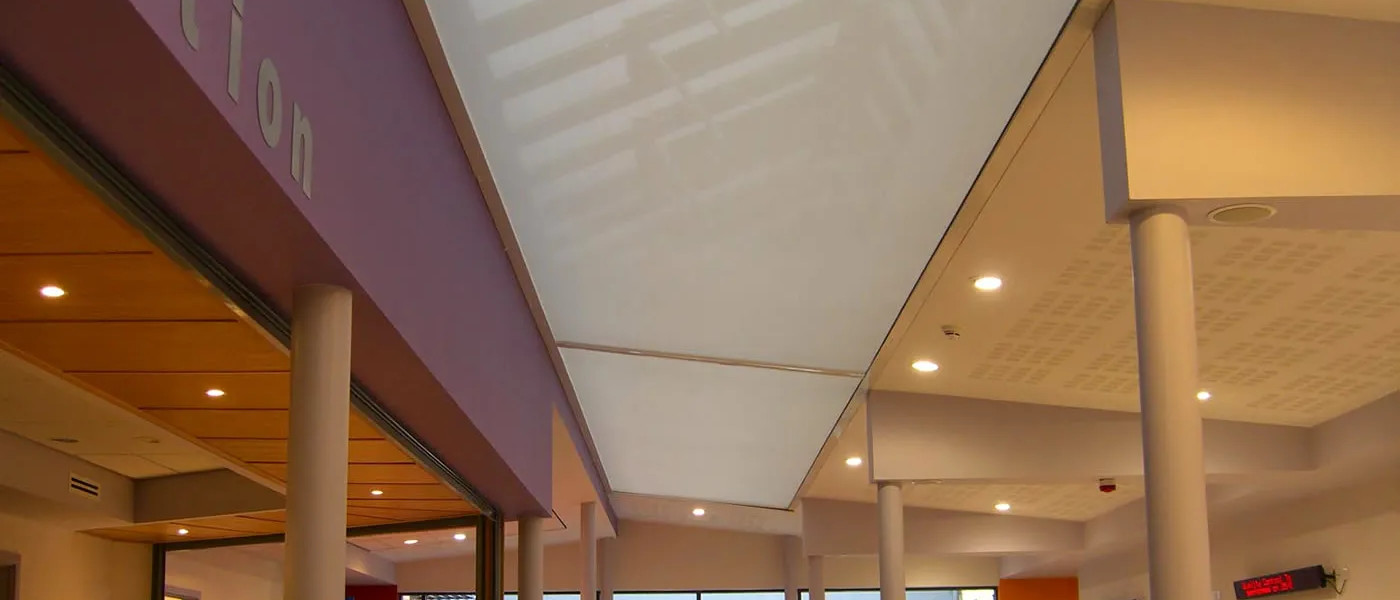
16m Motorised Rooflight Blind for an NHS Surgery
See how we designed and installed a bespoke 16-metre electric rooflight blind for a challenging glazed opening.
For oversized glazing, see our guide to extra-long and extra-wide blinds for further guidance on dimensions, support and operating systems.
Specifying shading for high-level glazing? See our commercial rooflight blind specification guide.
2. Control multiple blinds at the same time
Operating one blind is straightforward. A building containing dozens or hundreds of blinds creates a very different requirement.
Motorised systems can group blinds together so that several units operate from the same control.
Groups can be arranged around the way the building is used, for example by room, floor, zone or façade.
This can make day-to-day operation much easier in offices, schools, healthcare buildings, hotels and residential developments.
Facilities teams or occupants can adjust a group of blinds without visiting every window individually.
At Mayfield Watford, we supplied and installed motorised roller blinds as part of a large retirement village development.
Projects at this scale demonstrate how motorisation can make repeated blind operation far more manageable across multiple spaces.
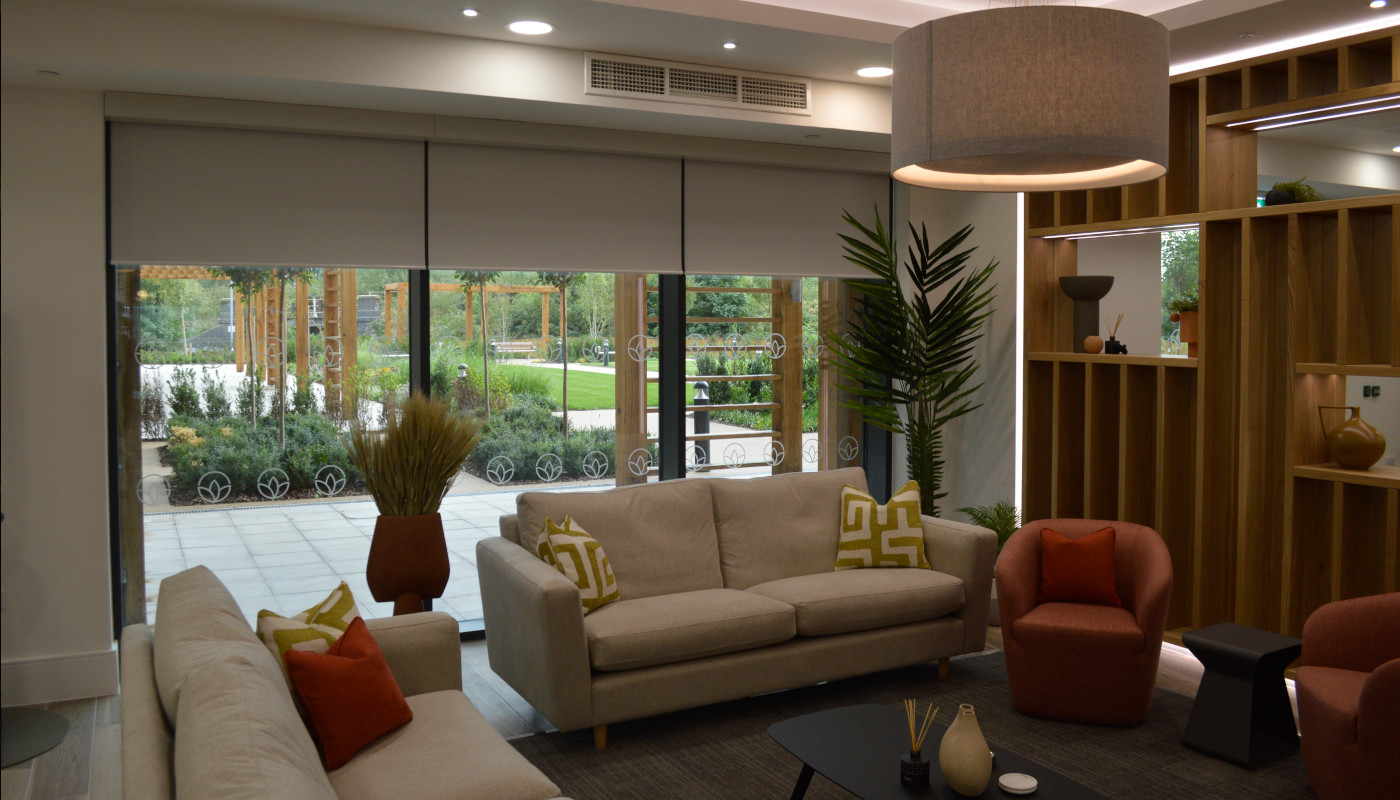
Motorised Roller Blinds at Mayfield Watford
See how motorised roller blinds were used across a major retirement village development in Watford.
3. Manage glare and daylight more consistently
Glare can change considerably throughout the day as the sun moves around a building.
The problem can be particularly noticeable around computer screens, meeting rooms, classrooms and heavily glazed façades.
Motorised blinds make it easier for occupants to adjust shading when conditions change. Group controls can also ensure that blinds across the same room or elevation are positioned consistently.
Fabric selection remains an important part of the specification.
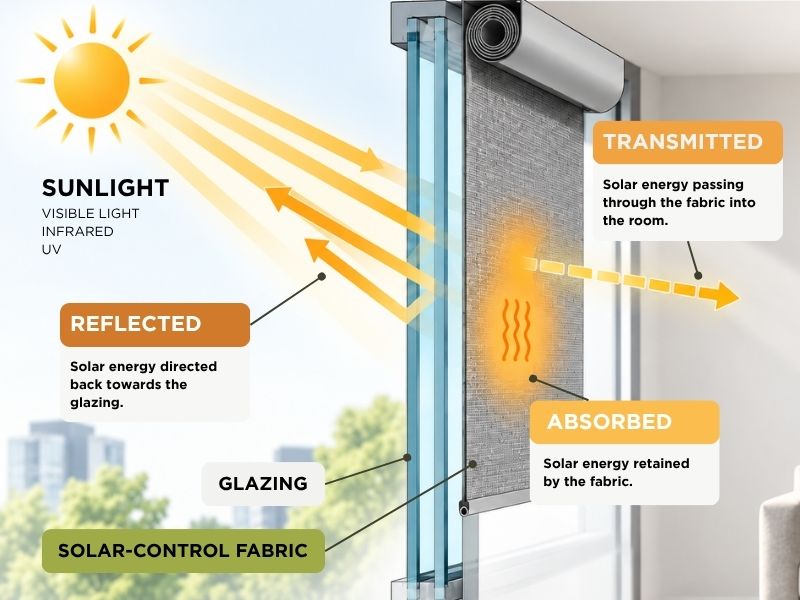
Openness, colour, visible light transmission and solar performance all affect how much daylight enters the space and how effectively glare is controlled.
For example, a solar-control fabric may reduce direct glare while retaining outward views, while blackout or dim-out fabrics may be more appropriate where much tighter light control is required.
Choosing the control system is only part of the specification. Explore our blind fabrics to compare options for glare control, light transmission, blackout and solar performance.
The most effective solution brings the blind, fabric, glazing and control strategy together rather than treating each element separately.

4. Help manage solar gain and overheating
Large areas of glazing can allow significant solar energy into a building, particularly on façades exposed to strong direct sunlight.
Blinds can help manage solar gain by reflecting, absorbing or reducing the amount of solar energy transmitted into the occupied space, depending on the fabric and system specified.
Motorisation makes it easier to position the shading when it is needed, while automated controls can allow blinds to respond according to schedules, solar conditions or a wider building-control strategy.
Timing matters. A blind that remains open during periods of intense solar exposure cannot provide the same shading benefit as one that is positioned before or during that exposure.
The performance of the overall system also depends on several other factors, including:
- heating, ventilation and cooling systems
- fabric openness and solar properties
- external and internal shading
- glazing type and orientation
- the control strategy used
- blind fabric and colour
- building occupancy
For this reason, energy savings should be assessed at building level rather than attributed to motorisation alone.
Consistent blind operation can therefore form part of a wider overheating and energy strategy.
Our blind fabric range includes solar-control, reflective, blackout and other performance fabrics that can be selected around the glazing and environmental requirements of your project.
For a wider look at glazing, shading and retrofit options, read our guide to commercial building overheating and solar shading.
5. Integrate shading with automated building controls
Motorised blinds can form part of a much wider building-control strategy.
Depending on the motor and control system selected, blinds can be connected to timers, sunlight sensors, central controllers or a Building Management System.
This allows shading to operate according to defined zones, schedules or changing conditions.
For example, blinds on an exposed façade could be lowered when direct solar exposure increases, while blinds elsewhere remain open to make use of natural daylight.
On larger projects, controls can also coordinate multiple blinds across rooms, floors or elevations rather than treating each blind as an individual device.
We have used this type of integrated control on major developments including One Tower Bridge, where more than 2,000 motorised blinds were incorporated into the apartments and connected to the home automation system.
At Manhattan Loft Gardens, more than 3,300 blinds formed part of a bespoke system that integrated shading with a lighting control module.

Manhattan Loft Gardens
More than 3,300 automated blinds were installed with integrated lighting controls, providing coordinated shading across a major residential development.

One Tower Bridge
Over 2,000 motorised blinds were integrated with apartment automation, combining discreet shading, grouped operation and coordinated control.
These projects show how motorised blinds can progress from simple powered operation to coordinated automated shading across a large development.
For commercial projects, the blind motors, control protocol and BMS requirements should be coordinated early between the shading specialist, architect, M&E consultant and controls contractor.
BMS Blind Control Integration
Integrate motorised blinds with building controls using compatible interfaces, sensors and control strategies designed around the requirements of your project.
For a deeper look at control strategies, read our guide to Smart Blinds and Curtains with Seamless BMS Control.
6. Improve accessibility and ease of operation
Motorised blinds can make shading much easier to operate where manual controls would be awkward, repetitive or difficult to reach.
This is particularly useful for high-level windows, rooflights, large blinds and spaces used by people with different mobility needs.
A wall switch, remote control or central controller can place operation at a more convenient height and remove the need to reach chains or cranks.
Motorisation can also be useful where the size or weight of the blind makes controlled powered movement more practical than repeated manual operation.
The right control method should be chosen around the people using the space.
A local switch may be sufficient in one building, while another may benefit from remote or central control.
7. Integrate blinds cleanly into the building design
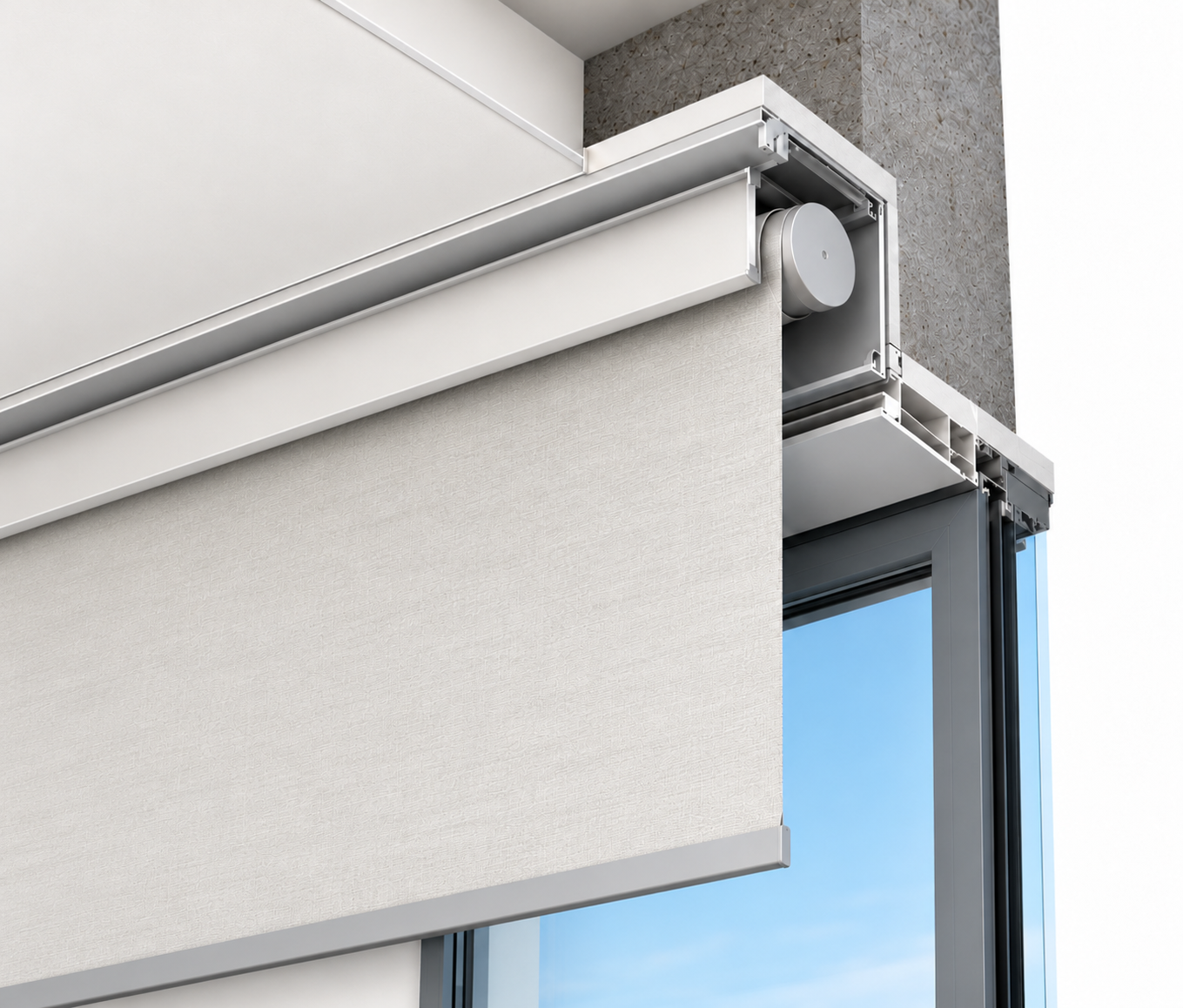
Motorised blinds can be incorporated into the architecture with fewer visible operating components around the window.
Removing manual chains, cords or cranks can create a cleaner finish, particularly in offices, hotels, residential developments and other design-led interiors.
The blind itself can also be concealed.
Bespoke blind boxes allow roller blinds to retract into ceiling or wall details, while cassette systems can enclose the roller, fabric and operating components within a more contained unit.
For the best result, these details should be coordinated early with the surrounding construction.
This may include:
- power supplies
- blind-box dimensions
- access for maintenance
- ceiling and wall interfaces
- motor and control locations
- cable routes and containment
- integration with lighting or other building services
Early coordination helps align blinds with ceilings, façades, electrical services and controls.
Explore our commercial blinds range for roller blinds, rooflight systems, cassette blinds and other shading options that can be specified with manual or motorised control.
When should you specify motorised blinds?
Motorisation is worth considering whenever the location, scale or frequency of operation makes manual blinds less practical.
Typical applications include:
- projects where visible chains and cords are undesirable
- buildings with automated lighting or BMS controls
- schools, healthcare buildings and public spaces
- residential developments with multiple blinds
- areas requiring grouped or central control
- high-level or difficult-to-reach glazing
- offices with changing glare conditions
- rooms containing several blinds
- rooflights and atriums
- large or heavy blinds
The level of control should match the building. A single large blind may only need a local switch, while larger projects may require grouped zones, sensors or BMS integration.
What control options are available?
Motorised blinds can be controlled in several ways. The right option depends on the number of blinds, the building layout and the level of automation required.
|
Control option |
How it is typically used |
|---|---|
|
Wall switch |
Simple local control for an individual blind or small group |
|
Remote control |
Convenient wireless operation within a room or defined area |
|
Group control |
Operates several blinds together within a room, zone or façade |
|
Central control |
Allows larger numbers of blinds to be managed from one point |
|
Timer or schedule |
Moves blinds at programmed times |
|
Sunlight sensor |
Allows the system to respond to changing solar conditions |
|
Automated control |
Uses programmed rules or sensor inputs to adjust blinds without regular user input |
|
BMS integration |
Connects blinds with wider building controls and management systems |
Available functions depend on the selected motor, controller, wiring arrangement and communication system.
On larger projects, agree the control strategy early so the blinds, electrical services and wider controls can be coordinated.
What should you consider when specifying motorised blinds?
A motorised blind should be specified as a complete system rather than choosing the motor in isolation.
Several factors affect how the blind should be designed and controlled.
|
Consideration |
What to review |
|---|---|
|
Blind size and weight |
Width, drop, fabric weight and the torque required to operate the blind reliably |
|
Blind type |
Roller, rooflight, cassette or specialist system and whether motorisation is suitable for the application |
|
Glazing and orientation |
Window size, solar exposure and where glare or overheating is likely to occur |
|
Fabric |
Openness, colour, light transmission, blackout requirements and solar performance |
|
Power supply |
The electrical supply required and how it will reach the motor |
|
Control strategy |
Individual, grouped, zoned, scheduled or automated operation |
|
Building integration |
Whether blinds need to connect with lighting, BMS or other controls |
|
Access |
How motors, blinds and control components will be reached for inspection or maintenance |
|
Architectural detailing |
Blind boxes, recesses, cassettes, ceiling interfaces and visible hardware |
|
Commissioning |
How limits, groups, sensors and automated functions will be set up and tested |
On a straightforward retrofit, it may be enough to establish the blind dimensions, available power and preferred method of operation.
On a new commercial development, blind specification can affect ceiling details, electrical layouts, control packages and BMS coordination.
Bringing these requirements together early can reduce design changes later in the programme.
Motorised blinds for new build and retrofit
Motorised blinds can be specified for both new buildings and existing properties, but the design considerations are different.
New build
New projects provide the best opportunity to coordinate shading with the wider building design from the start.
Key considerations include:
- power supplies and cable routes
- motor and controller locations
- access for future maintenance
- commissioning requirements
- BMS or lighting integration
- blind boxes and recesses
- ceiling interfaces
Early coordination can make the finished installation cleaner and reduce clashes between blinds, ceilings, façades and electrical services.
Retrofit
Motorisation can also be introduced into existing buildings where current blinds are difficult to operate or no longer meet the needs of occupants.
A retrofit survey should review:
- compatibility with existing building controls
- existing blind type and condition
- space for motors and controls
- containment and cable routes
- disruption during installation
- access to the glazing
- available power
The survey should establish whether the existing blind can be adapted reliably or whether replacing the complete blind and motor system will provide a better long-term result.
Some installations may suit a straightforward motorised replacement, while others may require a new blind system or changes to the surrounding detail.
|
New build |
Retrofit |
|---|---|
|
Coordinate power and controls early |
Review existing power and access |
|
Integrate blind boxes and recesses |
Assess existing blind condition |
|
Plan BMS integration from the outset |
Check compatibility with current controls |
|
Coordinate with ceiling and façade packages |
Minimise disruption during installation |
|
Design maintenance access into the detail |
Confirm future access after installation |
Motorised blinds by sector
Different buildings place different demands on motorised shading systems.

Offices
Motorised blinds can help manage glare across computer-based workspaces, coordinate multiple blinds and support wider lighting or building-control strategies.

Residential Developments
Grouped and automated blinds can provide convenient control across apartments, communal areas and larger glazed spaces while supporting clean architectural detailing.

Schools and Public Buildings
Motorised blinds can simplify operation in classrooms, halls, high-level glazing and other shared spaces where frequent manual adjustment would be inconvenient.

Hospitals and healthcare
Motorised blinds provide practical control for large, high-level or specialist glazing while supporting accessibility and easier day-to-day operation in clinical spaces.
Talk to us about motorised blinds
We design, supply and install motorised blind systems for commercial, residential, healthcare, education and specialist projects.
If you are planning a new installation or upgrading an existing building, we can help you assess the blind type, dimensions, fabric, power requirements, controls and integration needed for the project.

Frequently Asked Questions
What is the difference between motorised and automated blinds?
Motorised blinds use an electric motor and move when someone gives them a command, such as through a switch or remote control. Automated blinds can also respond to schedules, sensors or wider building controls without regular manual input.
Can existing blinds be converted to motorised operation?
Sometimes. It depends on the blind system, condition, dimensions and whether a suitable motor and power supply can be incorporated. In many retrofit projects, replacing the existing blind with a motorised system may provide a more reliable solution.
Do motorised blinds need mains power?
Many commercial motorised blind systems use a wired electrical supply, although the exact power requirements depend on the motor and control system selected. Power and cable routes should be considered early in the design.
Can motorised blinds connect to a BMS?
Yes, compatible motorised blind systems can be integrated with Building Management Systems and other controls. The required interfaces and communication method need to be agreed during specification.
Can several motorised blinds operate together?
Yes. Multiple blinds can be grouped so they operate together by room, zone, floor or façade, depending on the control system.
Are motorised blinds suitable for rooflights?
Yes. Rooflights are one of the most common situations where motorisation is useful because the blinds are often difficult or impossible to reach manually.
Are motorised blinds suitable for large windows?
Yes, provided the blind system and motor are correctly specified for the width, drop and fabric weight. Very large installations may require specialist blind systems and engineering.
Can motorised blinds help control overheating?
Motorised blinds can help manage solar gain by making it easier to position shading when it is needed. Automated controls can improve consistency further by responding to schedules or changing solar conditions. Overall performance also depends on the glazing, fabric, orientation and wider building design.