School Lockdown Sightline Checklist for Estates Managers
School lockdown planning is moving higher up the agenda for estates teams, school business managers, academy trusts and facilities managers.
Martyn’s Law, formally the Terrorism (Protection of Premises) Act 2025, became law on 3 April 2025. The Government has stated there will be an implementation period of at least 24 months before the main duties come into force.
For many schools, this gives time to review procedures, building layouts and practical site issues before Spring 2027.
One useful place to start is internal sightlines.
Where can someone see into occupied rooms? Which glazed areas would be difficult to cover quickly? Which doors, corridors and partitions should be checked during a lockdown review?
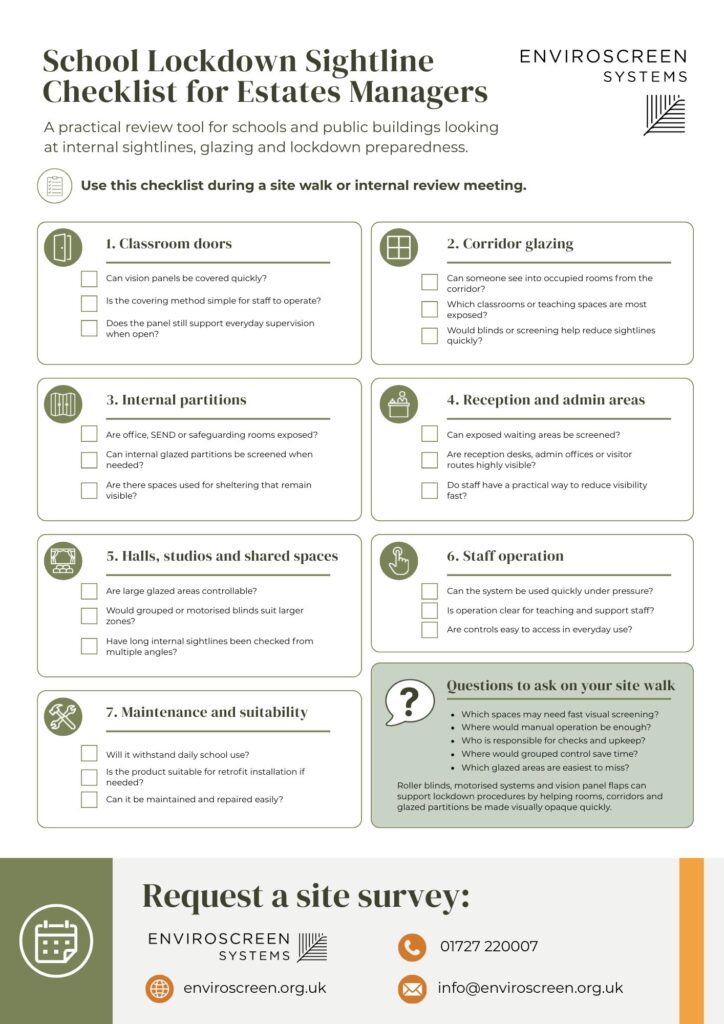
This checklist is designed to help you walk the site, spot exposed areas and decide where blinds, screening or vision panel flaps may support your wider safety and preparedness plan.
Download the School Lockdown Sightline Checklist
Use this checklist during a site walk, estates meeting or safeguarding review.
It helps you review:
- classroom door vision panels
- corridor-facing glazing
- internal glazed partitions
- reception and admin areas
- halls, studios and shared spaces
- staff operation
- maintenance and suitability
[Download the School Lockdown Sightline Checklist PDF]
Why internal sightlines matter
Many school buildings have a lot of internal glazing.
That glazing often serves a clear purpose. It supports supervision, daylight, openness, safeguarding and visibility across shared spaces.
During lockdown planning, those same glazed areas need to be reviewed from a different practical angle.
Can an occupied room be seen from the corridor?
Can a door vision panel be covered quickly?
Can a larger glazed area be screened without staff having to move through exposed routes?
These are building-level questions. They sit alongside your wider procedures for evacuation, invacuation, lockdown and communication.
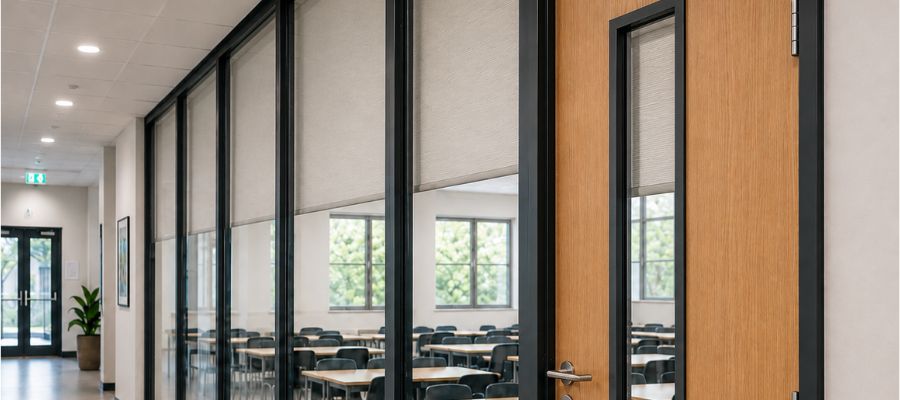
Blinds, vision panel flaps and screening products can support lockdown procedures by helping rooms, corridors and glazed partitions be made visually opaque quickly.
What Martyn’s Law means for schools
Martyn’s Law applies to qualifying premises and events across the UK.
For education, early years, primary, secondary and further education settings have a special position. Where 200 or more people are reasonably expected on site at the same time, these settings normally fall within the standard tier.
The standard tier focuses on having appropriate public protection procedures, so far as reasonably practicable.
Those procedures cover:
|
Procedure |
Meaning |
|---|---|
|
Evacuation |
Getting people away from danger |
|
Invacuation |
Moving people to a safer place inside |
|
Lockdown |
Securing premises against attackers |
|
Communication |
Alerting people and giving instructions |
This article focuses on one small but practical part of lockdown planning: controlling visibility through glazed areas.
Use the checklist during a site walk
A checklist works best when you use it in the building.
Walk the routes pupils, staff and visitors use every day. Look through internal windows, doors and partitions from the corridor side. Check what can be seen from reception, entrance areas and shared circulation spaces.
Include someone who understands daily site use, such as:
- architect or specifier for refurbishment projects
- senior leadership representative
- academy trust operations lead
- school business manager
- safeguarding lead
- facilities manager
- site manager
The aim is to turn a broad concern into a clear list of practical actions.
1. Classroom doors
Door vision panels are easy to overlook because they are small.
In practice, they can create a direct sightline into a classroom, office or teaching space.
Ask:
- Can vision panels be covered quickly?
- Is the covering method simple for staff to operate?
- Does the panel still support everyday supervision when open?
Vision panel flaps can help staff cover the glazed panel when required as part of a lockdown procedure.
They are especially useful where classroom doors face busy corridors or where rooms may be used as sheltering spaces.
2. Corridor glazing
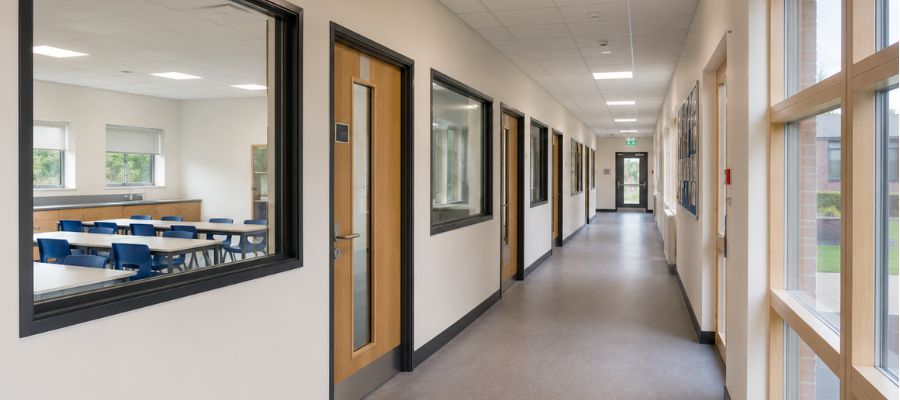
Corridor-facing glazing is common in schools.
It helps with visibility, movement and supervision during normal use. It can also expose occupied rooms during lockdown planning.
Ask:
- Can someone see into occupied rooms from the corridor?
- Which classrooms or teaching spaces are most exposed?
- Would blinds or screening help reduce sightlines quickly?
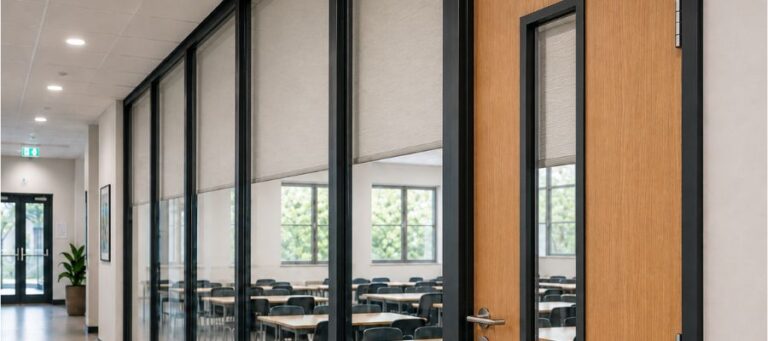
Internal roller blinds may be suitable for corridor-facing windows, glazed teaching spaces and partitions between classrooms and circulation routes.
3. Internal partitions
Glazed internal partitions are often used in offices, meeting rooms, SEND areas and safeguarding spaces.
These areas may need privacy every day. They may also need fast screening during a lockdown procedure.
Ask:
- Are office, SEND or safeguarding rooms exposed?
- Can internal glazed partitions be screened when needed?
- Are there spaces used for sheltering that remain visible?
Where full blackout is unnecessary, dim-out or privacy fabrics may give a more suitable level of screening.
4. Reception and admin areas
Reception areas can be difficult to manage because they sit between public access and internal school space.
Admin offices, waiting areas and visitor routes may include glazing that creates clear lines of sight.
Ask:
- Can exposed waiting areas be screened?
- Are reception desks, admin offices or visitor routes highly visible?
- Do staff have a practical way to reduce visibility fast?
Motorised or group-controlled blinds may be useful where several blinds need to operate together across a reception zone or entrance area.
5. Halls, studios and shared spaces
Large spaces can create long sightlines.
This can include sports halls, drama studios, dining spaces, libraries, atriums and multi-use areas.
Ask:
- Are large glazed areas controllable?
- Would grouped or motorised blinds suit larger zones?
- Have long internal sightlines been checked from multiple angles?
In larger spaces, manual operation may be too slow or impractical. Group control can help staff screen several blinds from one point.
6. Staff operation
A product only supports a procedure if people can use it quickly and clearly.
This is where estates teams should think beyond the product itself.
Ask:
- Can the system be used quickly under pressure?
- Is operation clear for teaching and support staff?
- Are controls easy to access in everyday use?
For individual classrooms, a manual blind or vision panel flap may be enough.
For corridors, halls, atriums or reception zones, motorised blinds and grouped controls may be easier to manage.
7. Maintenance and suitability
Schools need robust products.
Any blind, flap or screening system should suit daily school use, not only the day it is installed.
Ask:
- Will it withstand daily school use?
- Is the product suitable for retrofit installation if needed?
- Can it be maintained and repaired easily?
You should also consider access, fixing points, child safety, fabric choice, power, controls and future maintenance.
Quick review table
|
Area |
What to check |
Possible product fit |
|---|---|---|
|
Classroom doors |
Can vision panels be covered quickly? |
Vision panel flaps |
|
Corridor glazing |
Can someone see into occupied rooms? |
Internal roller blinds |
|
Internal partitions |
Are office, SEND or safeguarding rooms exposed? |
Privacy, dim-out or blackout blinds |
|
Reception |
Can exposed waiting areas be screened? |
Manual or motorised blinds |
|
Halls and studios |
Are large glazed areas controllable? |
Group-controlled or motorised blinds |
|
Staff operation |
Can the system be used quickly under pressure? |
Simple manual controls or grouped controls |
|
Maintenance |
Will it withstand daily school use? |
Commercial-grade systems with aftercare |
Where blinds and vision panel flaps can fit
Blinds and vision panel flaps can support lockdown procedures by helping schools reduce sightlines through glazed areas.
They can be used across:
- classroom doors
- corridor-facing windows
- glazed partitions
- reception areas
- halls and studios
- offices
- SEND and pastoral spaces
- shared learning areas
Product options may include:
- internal roller blinds
- manual blinds
- motorised blinds
- group-controlled blinds
- blackout fabrics
- dim-out fabrics
- privacy fabrics
- vision panel flaps
For more detail, visit our Lockdown and Sightline Control Blinds page.

Manual Blinds
Multiple control options and a wide fabric range.

Motorised Blinds
Every type of motorised and automated blind.
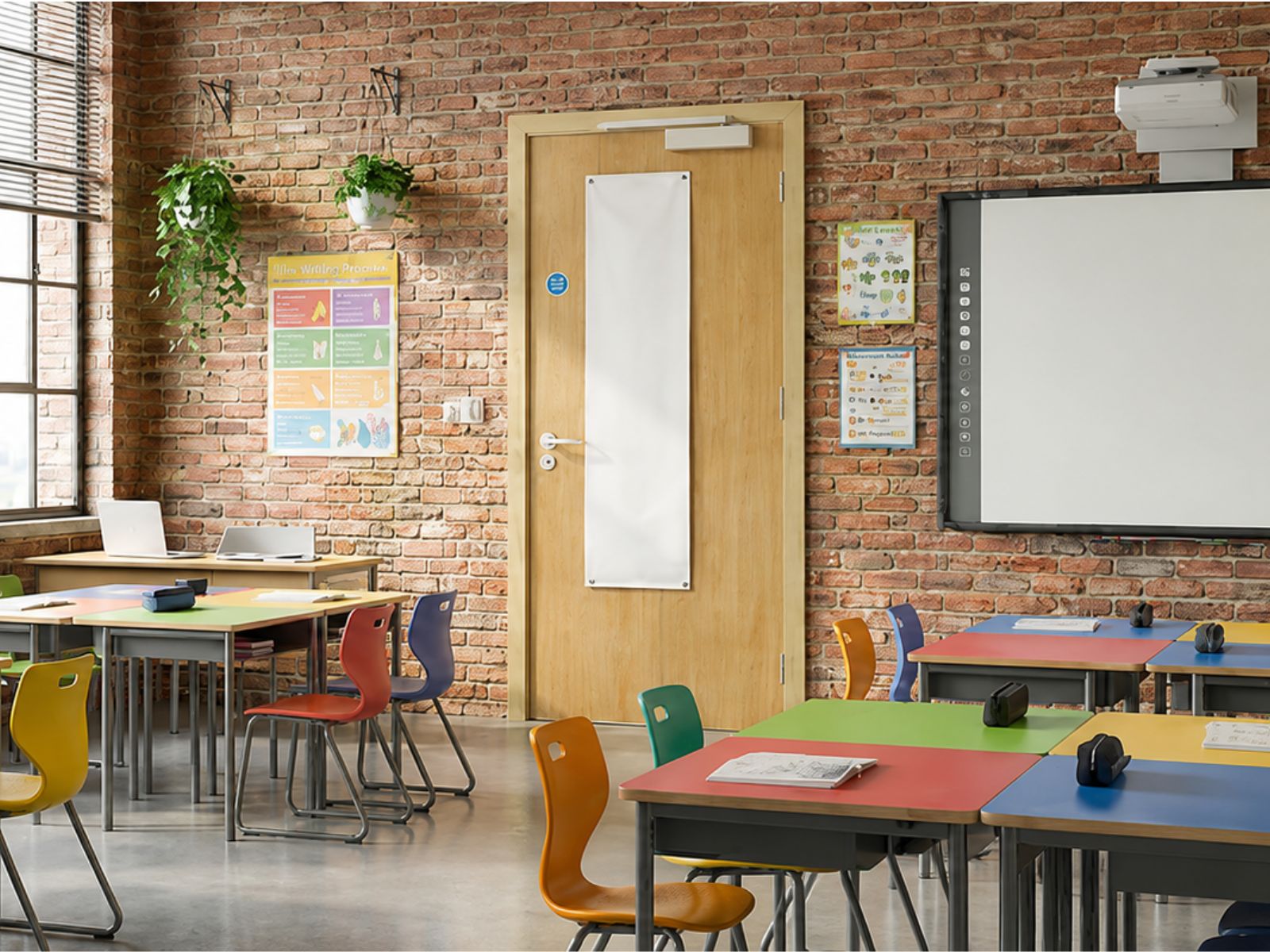
Vision Panel Flaps
Can be closed quickly during lockdown.
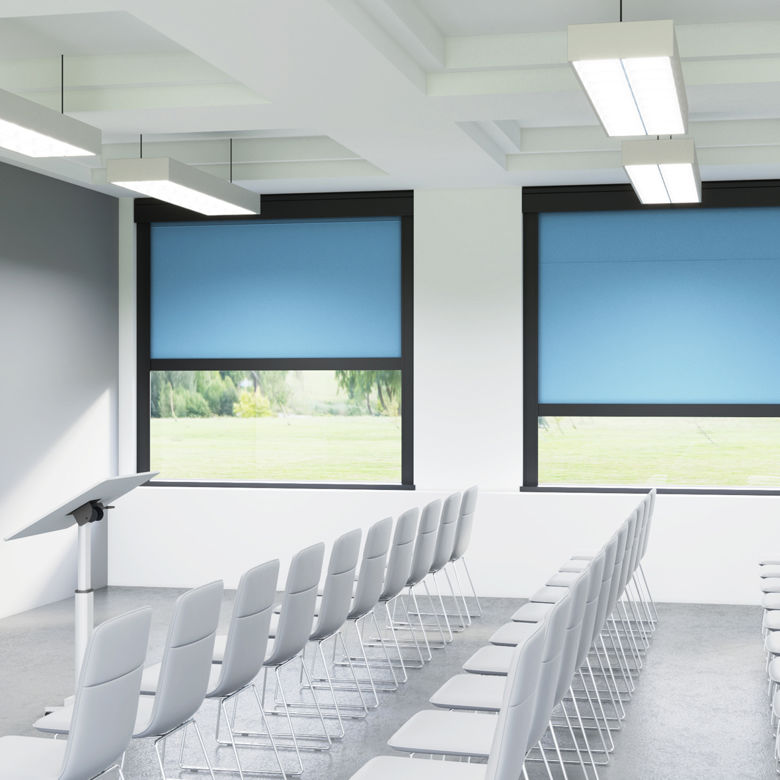
Blackout Fabrics
Can be closed quickly during lockdown.
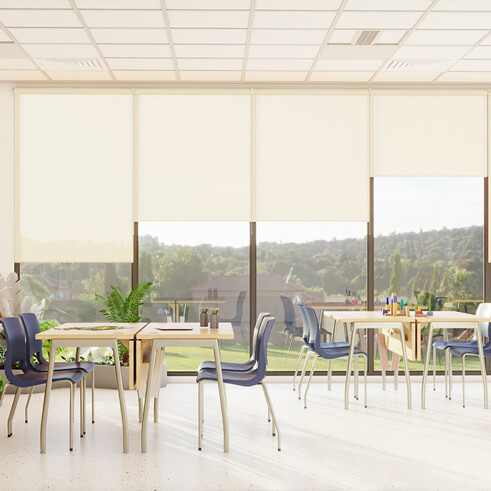
Dim-Out Fabrics
Can be closed quickly during lockdown.
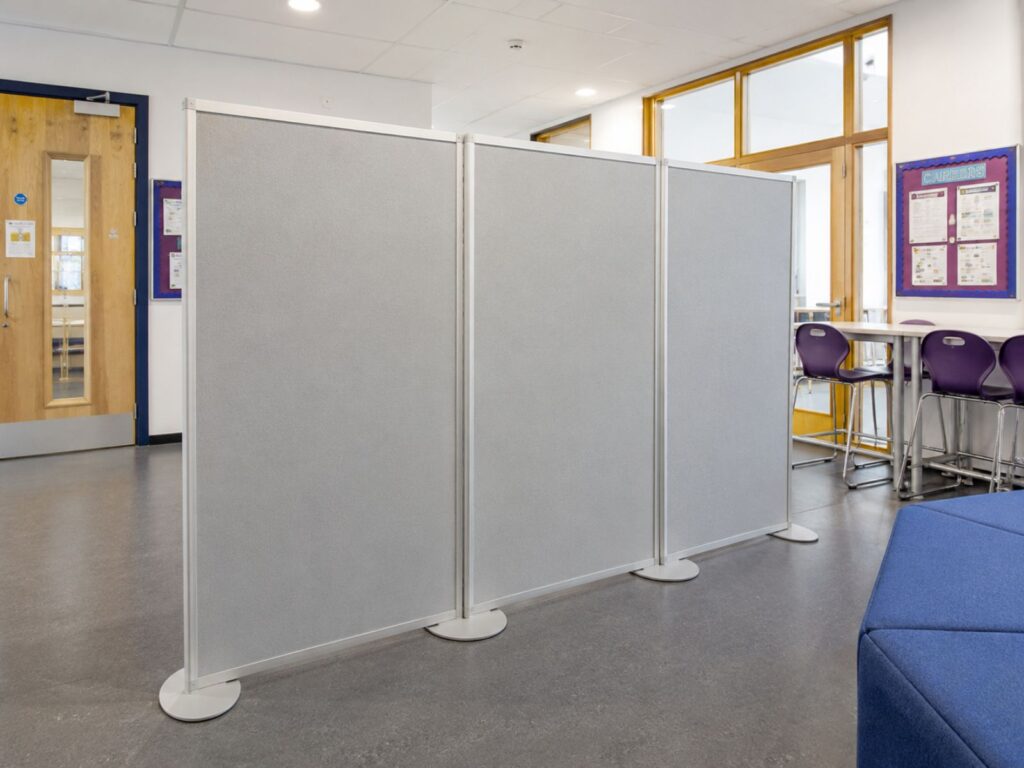
Protective Screens
Solutions that support safe environments.
Retrofit and new-build projects
Many schools will be reviewing existing buildings.
In these cases, retrofit installation may be the most practical route. A survey can check window sizes, fixing points, access, door types, existing finishes and product suitability.
For new-builds and refurbishments, sightline control should be considered earlier.
This helps architects, specifiers and contractors plan:
- blind recesses or fixing details
- power and controls
- fabric performance
- access for maintenance
- operation by staff
- consistency across rooms and zones
Early planning usually gives you a cleaner finish and fewer late-stage changes.
Questions to ask before specifying products
Before you choose a product, agree the role it needs to play.
Ask:
- Can products be fitted during a holiday period or phased works?
- Which glazed areas may need to be screened during lockdown?
- Which glazed areas are part of everyday safeguarding?
- How will staff be told when and how to use them?
- Which areas only need privacy or dim-out fabric?
- Who would operate each blind, flap or control?
- Who will check and maintain the products?
- Would manual operation be fast enough?
- Which areas need grouped control?
- Which areas need blackout fabric?
The best specification is simple, realistic and matched to your building.
How Enviroscreen can help
Enviroscreen Systems is a commercial shading and screening specialist with over 30 years of experience.
We work with schools, public buildings, healthcare environments, commercial spaces, architects, contractors and facilities teams.
We can support you with:
- fabric and control recommendations
- new-build specification support
- practical sightline reviews
- product advice
- retrofit options
- site surveys
- installation
- aftercare
For school lockdown and sightline control projects, we can advise on internal roller blinds, blackout and dim-out fabrics, motorised blinds, group-controlled systems and vision panel flaps.
These products can form part of a wider safety and preparedness plan alongside procedures, training, communication and site security measures.
Request a site survey
If you are reviewing school lockdown procedures, internal glazing or door vision panels, speak to us about practical sightline control options.
Request a site survey and we’ll help you check classrooms, corridors, glazed partitions, reception areas and shared spaces.

FAQs for School Lockdown Sightlines
Why should estates managers review door vision panels?
Door vision panels can give a direct view into classrooms and offices. Vision panel flaps can help cover the panel quickly when needed as part of a lockdown procedure.
Are motorised blinds suitable for schools?
Motorised blinds can suit larger glazed areas, grouped zones, reception areas, halls, atriums and harder-to-reach windows. The right control setup depends on the site and procedure.
Can existing schools retrofit lockdown sightline control blinds?
In many cases, yes. Suitability depends on the glazing, fixing points, access, operation method and daily use of the space. A site survey will confirm practical options.
Should every glazed area be covered?
Each area should be reviewed based on use, visibility, safeguarding, operation and the school’s wider procedures. Some areas may need full visual screening. Others may only need privacy control.
For enquiries about sightline control:
Enviroscreen Systems
Swift House,
13 Ronsons Way,
St Albans,
AL4 9QT
United Kingdom
Telephone: 01727 220 007
E-mail: info@enviroscreen.org.uk