Martyn’s Law and School Lockdown Planning: Blinds and Vision Panel Flaps
Martyn’s Law is bringing public protection planning into sharper focus for schools, colleges and public-sector buildings.
For many education settings, the first step is understanding the procedures you may need to plan for. The next step is reviewing how your actual building supports those procedures.
This article focuses on one practical area that can be easy to miss: visibility through internal glazed areas.
That includes corridor-facing windows, classroom glazing, glazed partitions, reception screens and door vision panels.
Blinds and vision panel flaps do one specific job in this wider plan. They help rooms, corridors and glazed partitions be made visually opaque quickly, supporting lockdown procedures where people may need to move out of sight.
What Martyn’s Law means for schools
Martyn’s Law is the common name for the Terrorism (Protection of Premises) Act 2025.
It became law on 3 April 2025. The Government intends an implementation period of at least 24 months, with commencement expected around Spring 2027.
For education settings, early years, primary, secondary and further education premises have a special position. If they can reasonably expect 200 or more people on site at the same time, they fall within the standard tier, even where the number is above 800.
Higher education and other larger public premises are treated differently, so schools and colleges should check the official guidance for their own position.
For standard tier premises, the core duty is to have appropriate public protection procedures, so far as reasonably practicable.
The four public protection procedures
GOV.UK sets out four named public protection procedures.
|
Procedure |
What it means in plain English |
|---|---|
|
Evacuation |
Getting people away from the premises |
|
Invacuation |
Moving people to a safer place inside |
|
Lockdown |
Securing the premises against attackers |
|
Communication |
Alerting people and giving clear instructions |
For schools, these procedures need to work in real buildings with real pupils, staff, visitors, contractors, after-school users and shared spaces.
That is where building checks matter.
Why lockdown procedures need practical building checks
A lockdown procedure depends on more than a written plan.
You need to understand how people move through the site, which doors can be secured, where people can shelter and how visible those areas are from outside the room or building.
Official guidance refers to considering existing equipment and structures. That includes whether doors can be locked and whether windows can be secured.
For schools, one of the practical questions is simple:
Can you reduce visibility into occupied rooms quickly if a lockdown procedure is activated?
This matters because many modern education buildings use internal glazing for supervision, safeguarding, daylight and openness. Those design features have real everyday value.
During a lockdown review, the same glazed areas may need a second look.
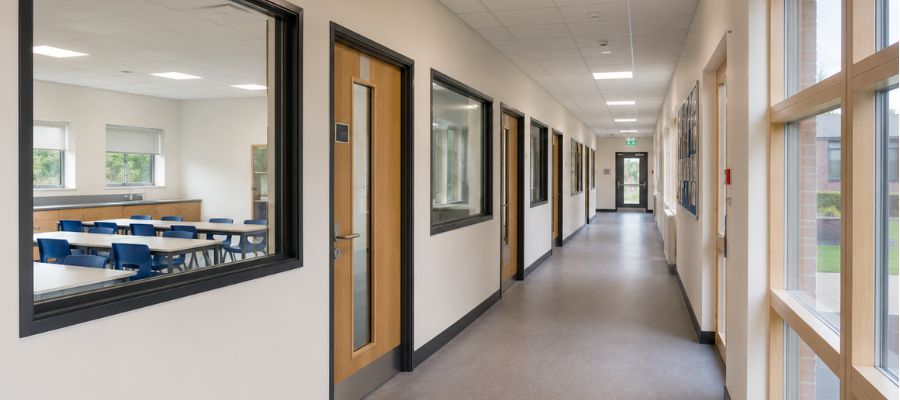
Internal sightlines schools should review
When you’re updating or replacing windows in a commercial or public building, you’ll When you review lockdown procedures, look beyond external windows.
Many sightlines are inside the building.
|
Area to check |
Why it matters |
Possible response |
|---|---|---|
|
Classroom door vision panels |
People inside may remain visible from corridors |
Vision panel flaps or suitable screening |
|
Corridor-facing classroom windows |
Teaching spaces may be visible from main circulation routes |
Internal roller blinds or privacy fabrics |
|
Glazed partitions |
Offices, breakout rooms or learning spaces may be exposed |
Manual or motorised blinds |
|
Reception glazing |
Staff and visitors may be visible from entrance areas |
Privacy or dim-out screening |
|
Hall and studio glazing |
Larger spaces may have long internal sightlines |
Group-controlled blinds |
|
SEND rooms and pastoral spaces |
Smaller rooms may need fast privacy control |
Simple manual blinds or flaps |
|
Admin offices |
Staff areas may face public or semi-public routes |
Privacy fabrics or roller blinds |
|
Library and shared study areas |
Open-plan layouts often have multiple sightlines |
Zonal screening review |
The aim is to understand where visibility exists, then decide whether it needs to be managed as part of your wider safety and preparedness plan.
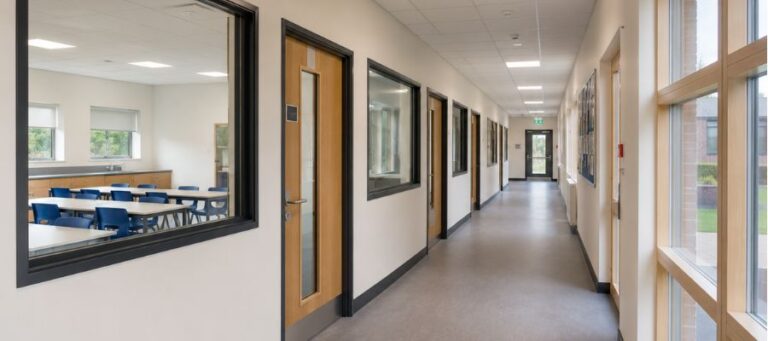
Corridor windows, classroom glazing and door vision panels
Corridor-facing glazing is common in schools.
It helps staff supervise movement, keeps spaces feeling open and allows borrowed light into internal rooms.
During lockdown planning, the question is how quickly those same sightlines can be closed when required.
Typical areas include:
- windows into SEND, pastoral or medical rooms
- office glazing beside reception or entrances
- glazing into halls, studios or shared spaces
- internal glazed partitions between rooms
- classroom windows facing corridors
- door vision panels
A room may feel private during normal use but still be visible from several angles.
A sightline review should check what can be seen from corridor level, entrance points and main circulation routes.
How blinds can support lockdown procedures
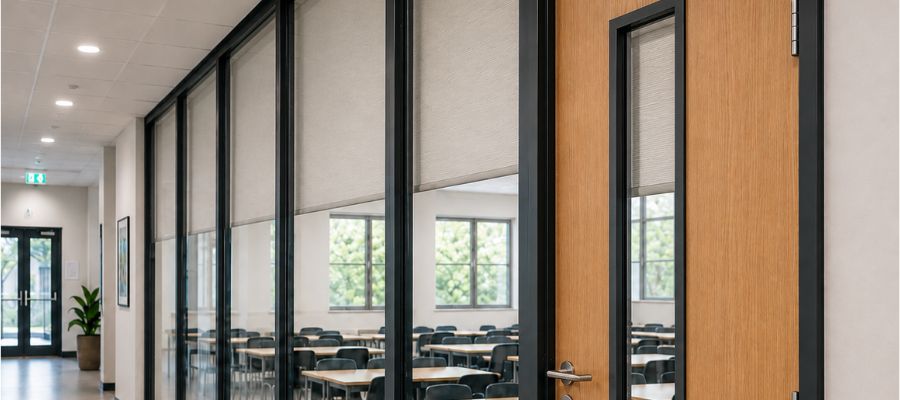
Internal roller blinds can help reduce visibility through glazed areas quickly.
For many classrooms, manual roller blinds are a practical option. They are simple to operate, easy to understand and suitable for individual rooms where staff control the space directly.
For larger areas, motorised blinds may be more suitable. These can be useful for reception zones, halls, long corridors, atriums or grouped teaching spaces where several blinds need to move at once.
Depending on the project, you may want to consider:
- manual blinds for individual rooms
- retrofit installation for existing schools
- blackout fabrics for stronger visual screening
- dim-out fabrics where full blackout is unnecessary
- motorised blinds for larger or harder-to-reach areas
- group-controlled blinds for zones, corridors or shared spaces
- early specification support for new-build and refurbishment projects
The right answer depends on the building, the procedure and how staff would operate the system under pressure.
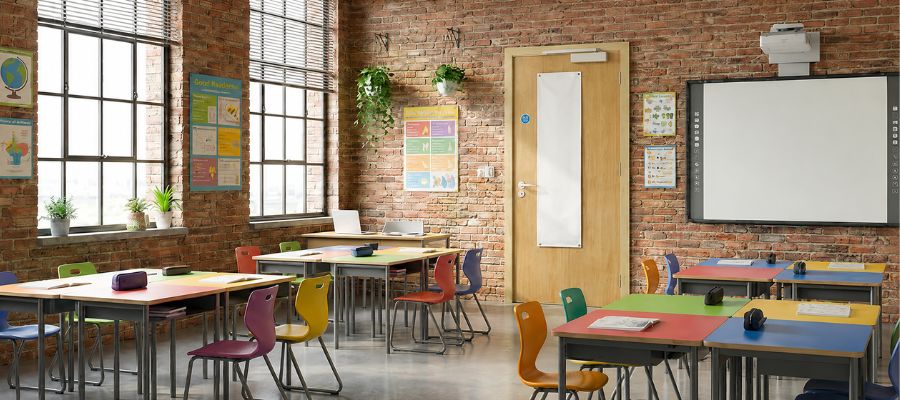
How vision panel flaps work during lockdown
Door vision panels are useful in normal school life.
They support supervision, safeguarding and everyday visibility. They also create a clear sightline into a room.
Vision panel flaps are designed to cover that glazed panel when required. In a lockdown procedure, this can help people inside a classroom or office remain out of sight from the corridor.
They are especially relevant where:
- rooms are used for sheltering as part of a lockdown plan
- the door glazing gives a direct view into occupied space
- staff need a fast, simple method of covering the panel
- teaching rooms are used by younger pupils
- classroom doors face busy corridors
For many schools, door vision panels are one of the easiest areas to miss because they are small. In practice, they can create a direct view into the room.
Manual, motorised and group-controlled options
Different areas of a school need different levels of control.
|
Option |
Best suited to |
Key consideration |
|---|---|---|
|
Manual roller blinds |
Classrooms, offices and smaller rooms |
Staff need easy access and clear instructions |
|
Motorised blinds |
Larger glazed areas, high-level glazing and shared spaces |
Power, controls and maintenance access need planning |
|
Group-controlled blinds |
Corridors, halls, reception zones and multi-room areas |
Zones should match the lockdown procedure |
|
Vision panel flaps |
Classroom doors, offices and room entrances |
The flap needs to be quick and simple to close |
|
Blackout fabrics |
Spaces where strong visual screening is needed |
Check fabric, side gaps and installation detail |
|
Dim-out or privacy fabrics |
Areas needing everyday privacy and reduced visibility |
May be suitable where full blackout is unnecessary |
A good specification should match the way the school would actually respond during a lockdown.
What to review before 2027
Use this checklist as a starting point for estates, safeguarding and senior leadership discussions.
School sightline review checklist
- Does the specification support the school’s wider procedure rather than sit separately from it?
- Can reception, admin or pastoral areas be seen from public-facing routes?
- Which buildings, blocks and rooms are likely to be used during lockdown?
- Are staff instructions simple enough to follow under pressure?
- Which glazed areas may need fast screening during lockdown?
- Which glazed areas need everyday visibility for safeguarding?
- Would grouped or motorised control support larger zones?
- Are there any access, fixing or fire-safety considerations?
- Can people inside classrooms be seen from corridors?
- Can the solution be maintained and repaired easily?
- Are blinds or flaps suitable for retrofit installation?
- Would manual operation be realistic for staff?
- Are products robust enough for school use?
- Which rooms have corridor-facing glazing?
- Which doors have vision panels?
The most useful review is practical. Walk the site. Stand in the corridor. Look through the glass. Check what can be seen.
Questions estates teams should ask now
Before specifying products, ask:
- Are there future refurbishment plans that should include sightline control from the start?
- Are there areas where a single room-by-room approach would be too slow?
- Which spaces need blackout fabric and which only need privacy fabric?
- How quickly would each area need to be made visually opaque?
- Which sightlines may need to be closed during lockdown?
- Can the products be fitted without major disruption?
- How will the products be inspected and maintained?
- Which sightlines are part of everyday safeguarding?
- How will the system be explained to staff?
- Who would operate each blind or flap?
These questions help you move from a general concern to a clear specification.
Where Enviroscreen products fit
Enviroscreen is a commercial shading and screening specialist with over 30 years of experience across schools, public buildings, healthcare, commercial spaces and contractor-led projects.
We support projects from survey and specification through to installation and aftercare.
For school lockdown and sightline control planning, our relevant product areas include:
- manual blinds
- dim-out fabrics
- blackout fabrics
- motorised blinds
- vision panel flaps
- retrofit installation
- group-controlled blinds
- new-build specification support
These products can support lockdown procedures by helping schools and public buildings control visibility through glazed areas quickly.
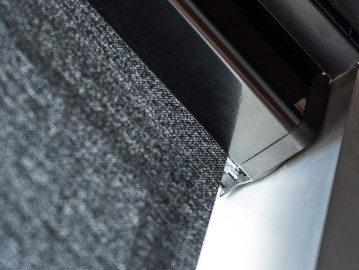
Manual Blinds
Multiple control options and a wide fabric range.

Motorised Blinds
Every type of motorised and automated blind.
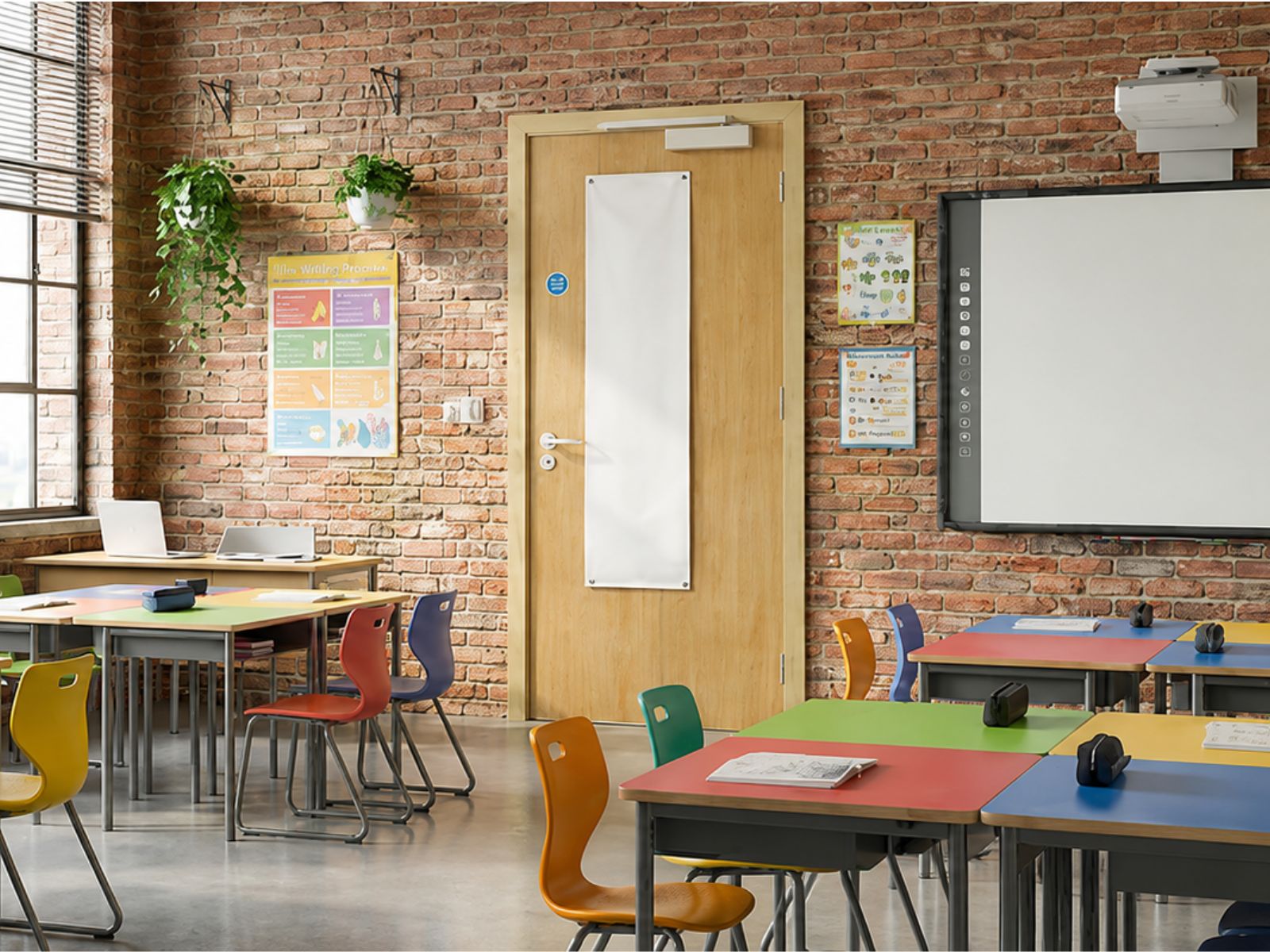
Vision Panel Flaps
Can be closed quickly during lockdown.
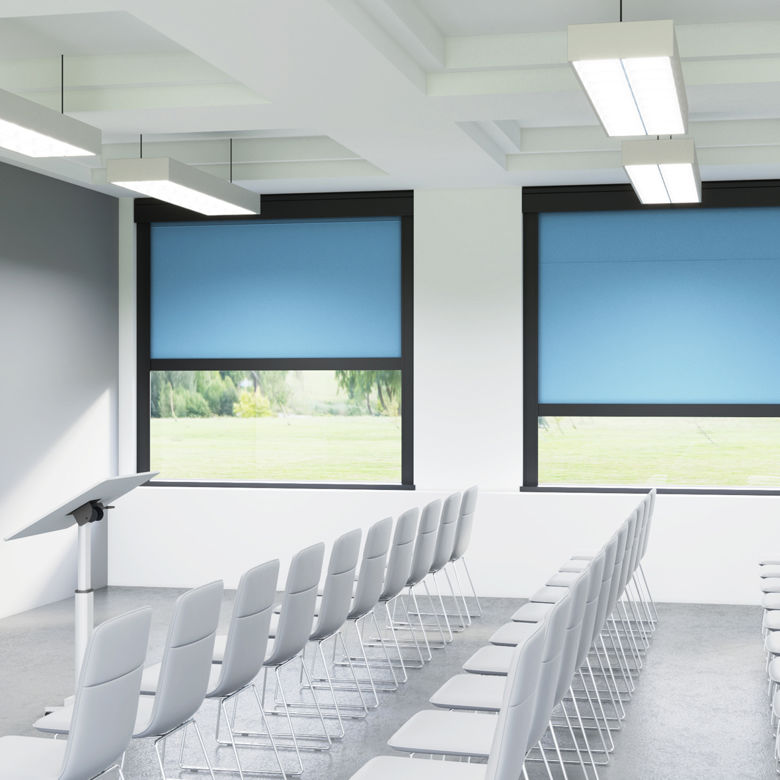
Blackout Fabrics
Can be closed quickly during lockdown.
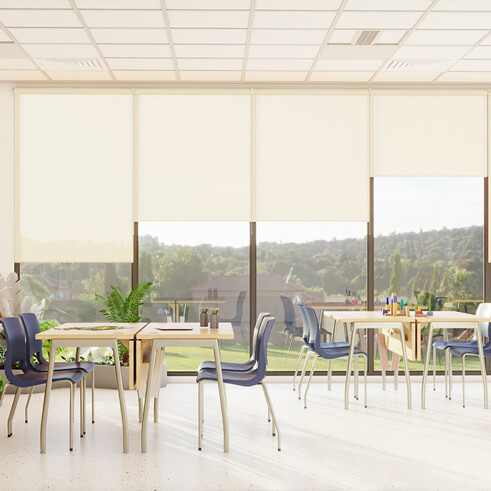
Dim-Out Fabrics
Can be closed quickly during lockdown.
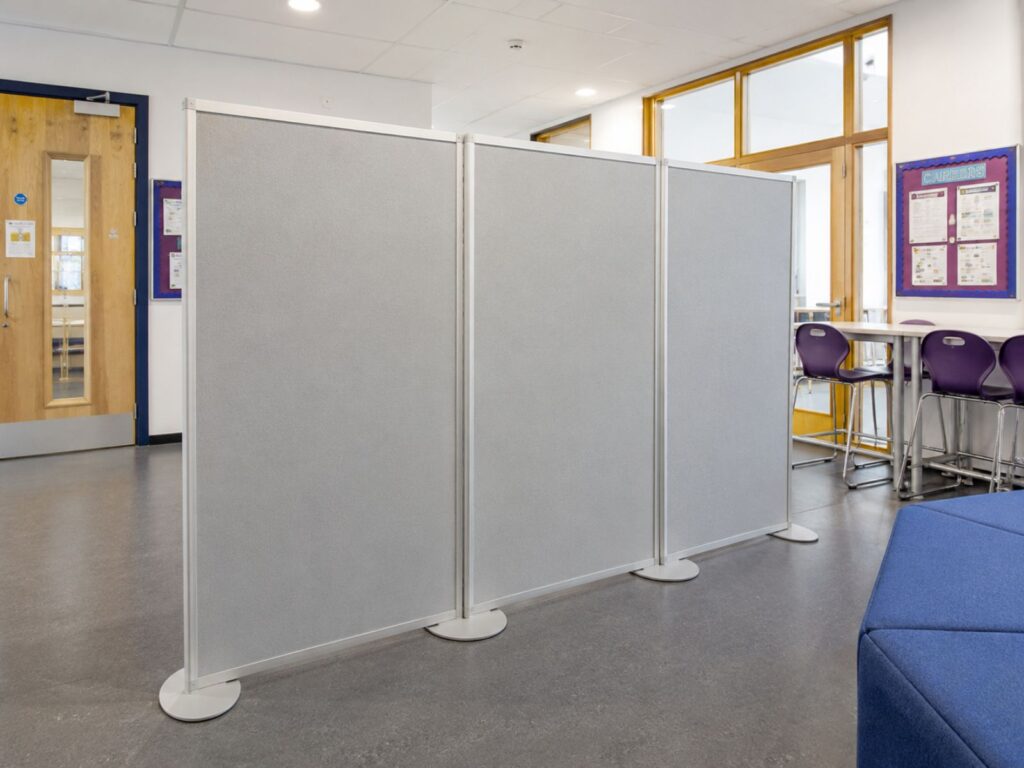
Protective Screens
Solutions that support safe environments.
They can form part of a wider safety and preparedness plan alongside procedures, training, communication, access control and emergency planning.
For more detail, see our Lockdown and Sightline Control Blinds page.
You can also access our School Lockdown Sightline Review Guide PDF for a practical checklist to use during site walks and internal planning meetings.
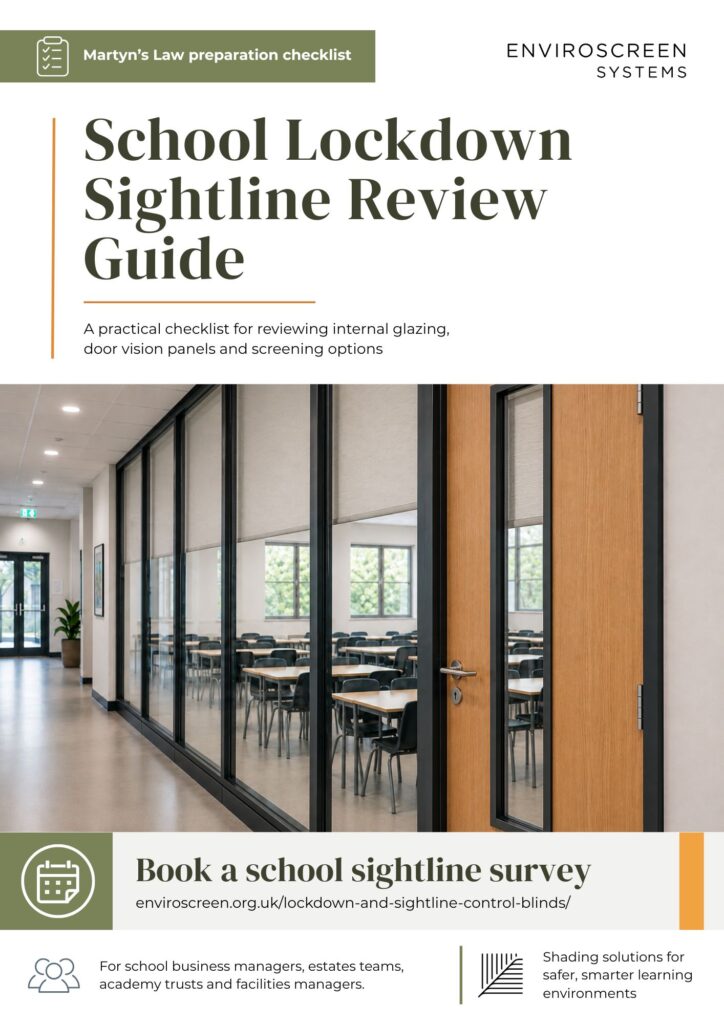
Book a school sightline survey
If you are reviewing lockdown procedures, glazed areas or internal sightlines ahead of Martyn’s Law commencement, speak to Enviroscreen about lockdown and sightline control blinds.
Book a school sightline survey and we’ll help you identify practical options for classrooms, corridors, door vision panels, reception areas and shared spaces.

FAQs for Martyn’s Law and School Lockdown Planning
Do blinds or vision panel flaps make a school Martyn’s Law compliant?
No product can make a school compliant on its own.
Martyn’s Law is about public protection procedures, roles, communication and preparedness. Blinds and vision panel flaps can support one part of a wider lockdown and safety plan by helping reduce visibility through glazed areas.
Should schools use blackout fabric or privacy fabric?
It depends on the room and the sightline.
Blackout fabric gives stronger visual screening. Dim-out or privacy fabrics may be suitable where you need reduced visibility, everyday privacy or a softer level of light control.
A survey can help you decide where each fabric type makes sense.
Are manual blinds suitable for lockdown planning?
Manual blinds can be suitable for individual classrooms and smaller rooms where staff can close them quickly.
For larger areas, grouped glazing, high-level windows or long corridors, motorised blinds may be more practical.
Can these products be retrofitted into existing schools?
In many cases, yes.
Retrofit installation depends on the window, door, fixing surface, access, existing finishes and how the product needs to operate. A site survey is the best way to check what is practical.
Should new-build schools specify sightline control early?
Yes.
Early specification helps architects and contractors plan fixing details, power, controls, fabric selection, access and maintenance. It can also help avoid late changes once the building is already on site.
For enquiries about sightline control:
Enviroscreen Systems
Swift House,
13 Ronsons Way,
St Albans,
AL4 9QT
United Kingdom
Telephone: 01727 220 007
E-mail: info@enviroscreen.org.uk