Comprehensive Guide to Anti-Ligature Products in Healthcare
Anti-ligature products are designed to reduce opportunities for a person to use fixtures, fittings or furnishings as ligature points.
They are particularly important in mental health and other healthcare environments where an assessment has identified a risk of self-harm or suicide.
The term covers a wide range of products, from doors, sanitary fittings and furniture to blinds, curtains and tracking systems. The appropriate solution will depend on the healthcare setting, how the space is used and the level of risk identified.
Product selection therefore forms part of a wider approach to managing ligature risk within the built environment.
NHS guidance emphasises the need for a systematic approach that considers the building, fixtures and fittings, individual service-user risk, supervision and operational procedures together.
What Are Anti-Ligature Products?
Anti-ligature products are fixtures, fittings and systems designed to reduce potential points from which a ligature could be attached.
Depending on the product and application, this can be achieved through features such as:
- load-release or magnetic-release components
- enclosed or concealed fixings
- reduced projections and attachment points
- tamper-resistant construction
- cord-free or controlled operating systems
- specialist shapes and configurations designed for higher-risk environments
You may also see terms such as reduced-ligature, ligature-resistant and load-release used. The exact terminology depends on the product and manufacturer.
It is important to consider these products within the context of the room and its users.
A product described as anti-ligature does not remove every potential risk within a space.
NHS guidance for mental health facilities specifically calls for a systematic approach that considers the built environment alongside operational and individual patient factors.
Where Are Anti-Ligature Products Used in Healthcare?
Anti-ligature products are most closely associated with mental health facilities, although they may be considered in other healthcare environments where a ligature risk has been identified.
This can include:
- areas where patients may spend time with reduced supervision
- secure and higher-risk healthcare environments
- consultation and therapy spaces
- assessment and treatment areas
- bedrooms and ensuite facilities
- adult acute mental health units
- psychiatric wards
Requirements can vary considerably within the same building.
A bedroom used by a patient without direct supervision may present different risks from a staff-controlled clinical room or communal area.
The patient group, visibility, staffing, access and intended use of the space can all affect the design response.
Current NHS guidance reflects this risk-based approach. HBN 03-01 guidance for adult acute mental health units states that there is no single standardised approach to assessing ligature risk because environments, patient groups and relative risks vary by context and over time.
This makes early coordination between clinical teams, estates teams, designers and specialist suppliers particularly important.
What Types of Anti-Ligature Products Are Available?
Ligature risk can involve many parts of the healthcare environment, so anti-ligature and reduced-ligature design can extend across fixtures, fittings, furniture and building services.
Typical product categories include:
Doors and hardware
Door handles, hinges, closers and other hardware can be designed to reduce potential attachment points.
Specialist door systems may also incorporate observation, access-control and privacy requirements appropriate to mental health environments.
Sanitary fittings and washroom products
Taps, shower fittings, rails, dispensers and other washroom components can require specialist designs where an assessed ligature risk is present.
Furniture
Furniture used in higher-risk healthcare environments may be selected for its construction, durability, resistance to tampering and ability to reduce potential ligature points.
Heating, lighting and electrical fittings
Radiators, luminaires, switches and other building services may require specialist housings, fixings or configurations depending on the room and risk assessment.
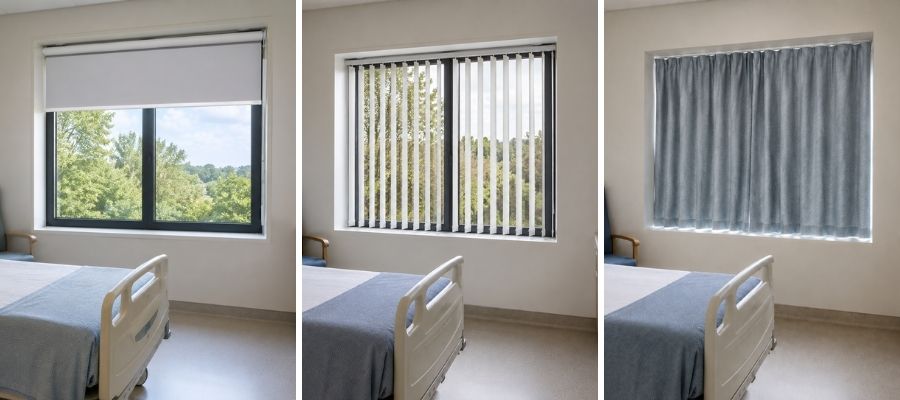
Anti-ligature blinds
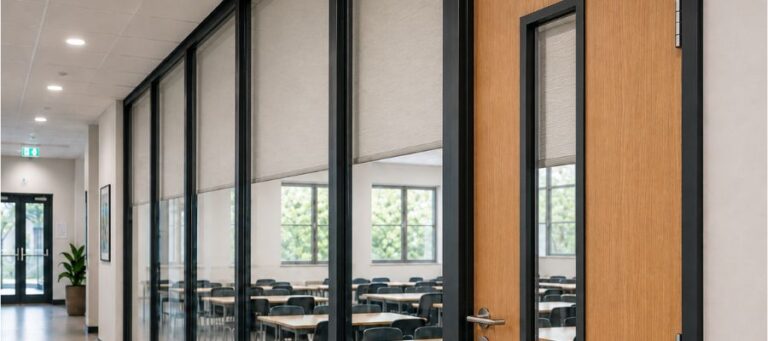
Windows still need to provide appropriate privacy, daylight and solar control within many higher-risk healthcare environments.
Specialist roller and vertical blinds can therefore use controlled operating methods and load-release components designed to reduce ligature opportunities.
Enviroscreen supplies both anti-ligature roller blinds and anti-ligature vertical blinds for applications where these requirements have been identified.
Anti-ligature curtain tracks
Curtains may be required for privacy, screening or window treatments. Specialist curtain tracks can incorporate load-release or magnetic fixing systems designed to separate when excessive force is applied.
Curtain and tracking requirements in healthcare are covered by NHS Health Building Note 00-10 Part E: Curtains and tracking, published in its current form in October 2023.
Anti-ligature cubicle tracking
Cubicle curtains introduce additional considerations because the tracking often extends into the room and may need to be suspended from walls or ceilings.
Magnetic load-release cubicle tracking provides a way to create flexible privacy arrangements while addressing identified ligature risks.
Our wider Anti-Ligature Blinds & Curtain Tracking Systems range brings these window, curtain and cubicle solutions together for healthcare projects where reduced-ligature products are required.
Anti-Ligature Blinds for Healthcare Environments
Blinds in mental health and higher-risk healthcare environments need to provide practical light control and privacy while addressing potential risks associated with accessible operating cords, chains and fixed load-bearing components.
The appropriate system will depend on the room, how the blind will be operated and the assessed ligature risk.
Control method, fixing arrangement, fabric and the way the blind releases under abnormal load should therefore be considered together.
Anti-Ligature Roller Blinds
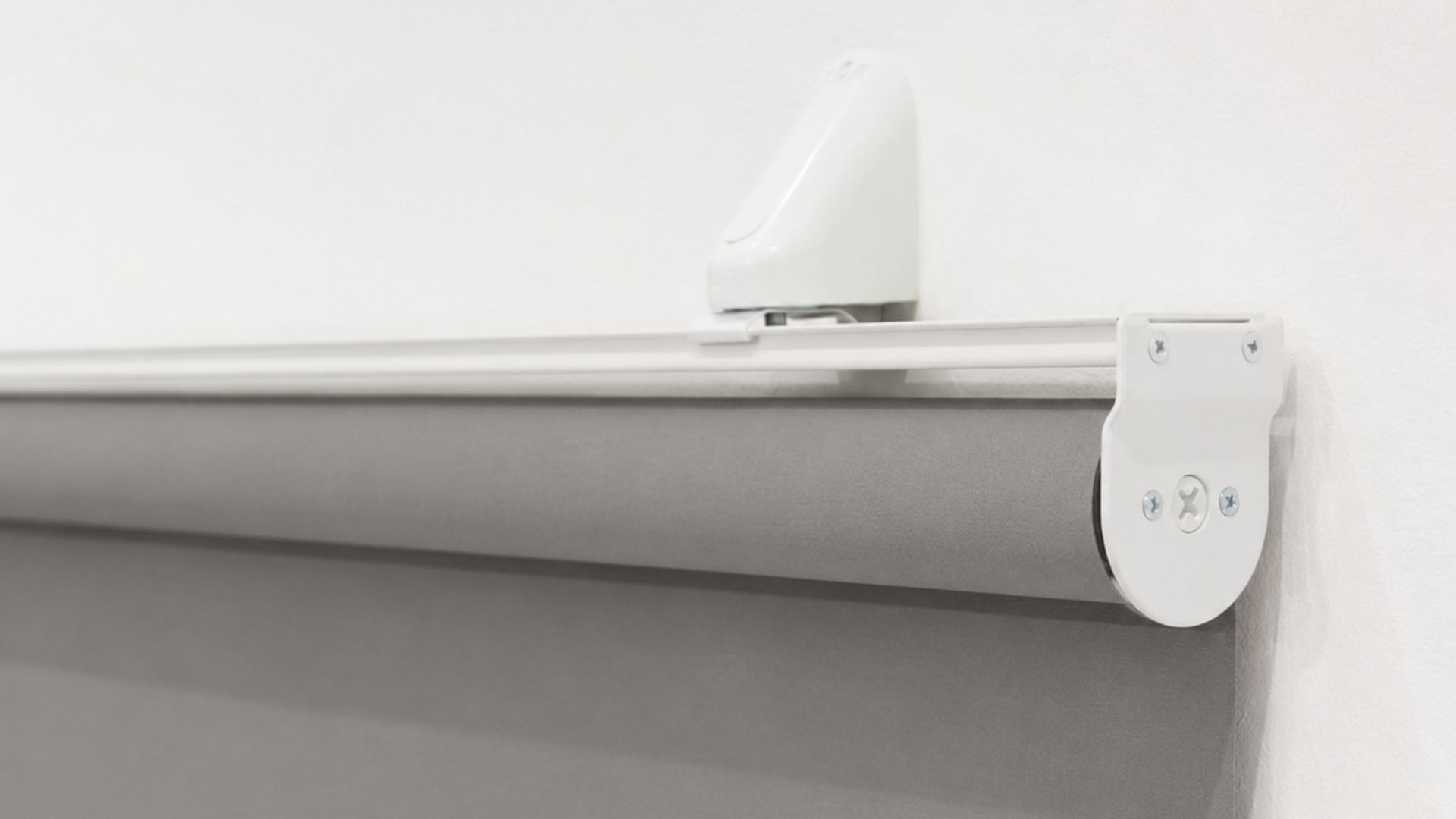
Anti-ligature roller blinds can provide privacy, glare control and shading while incorporating load-release fixings designed for higher-risk environments.
Our Kestrel roller blind systems use magnetic brackets to support the blind during normal use. If excessive downward force is applied, the blind assembly separates from the fixed brackets.
Different operating methods are available, including conventional sidewinder control, a detachable crank and a cord and chain-free slow-rise spring system.
This allows the control method to be selected around room use and the assessed risk rather than applying the same configuration throughout a healthcare facility.
For dimensions, control options, fabrics and fixing information, see our Anti-Ligature Roller Blinds.
Anti-Ligature Vertical Blinds
Vertical blinds can be useful where you need adjustable daylight, glare and privacy control while retaining the ability to vary the angle of the louvres.
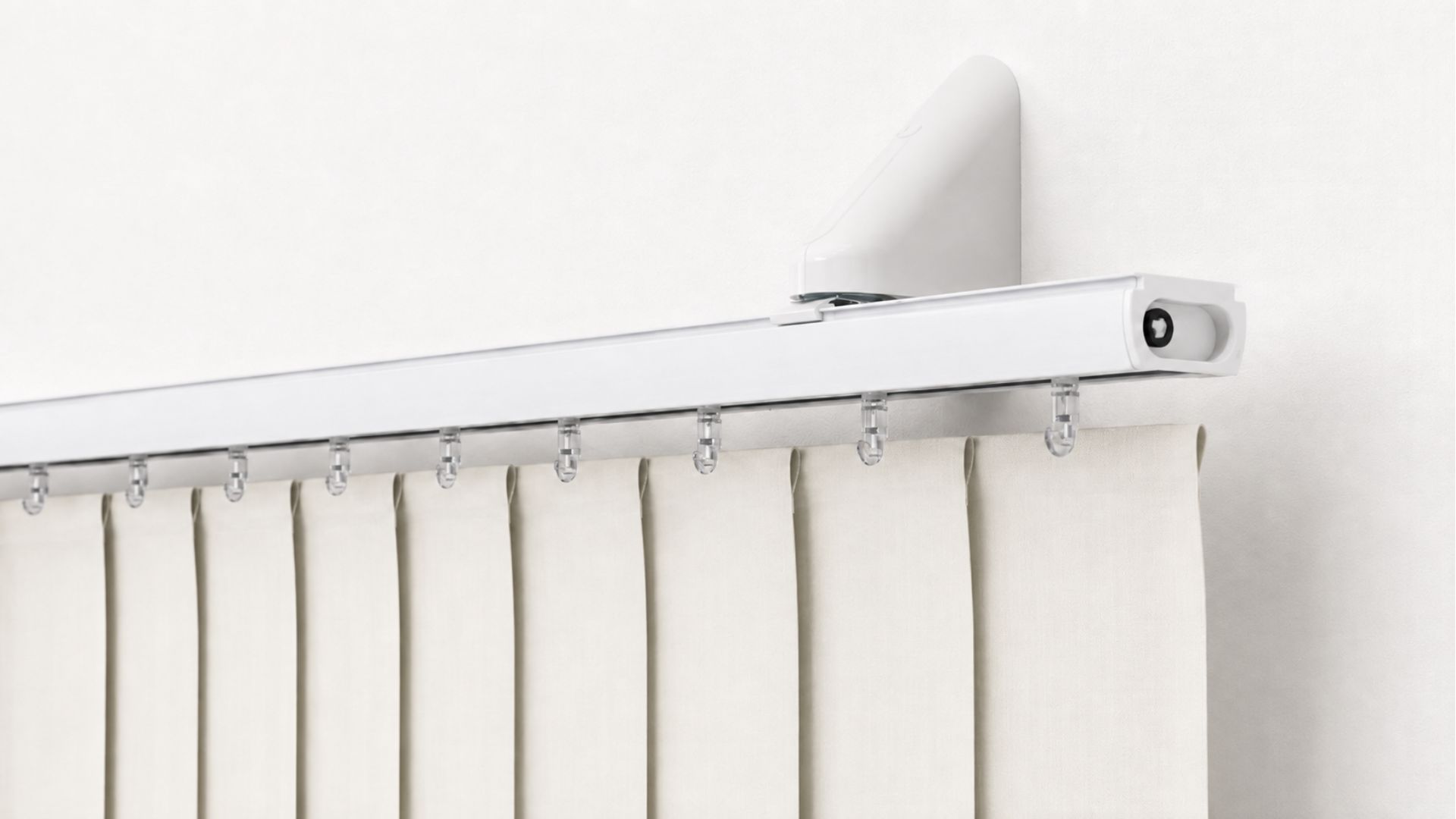
Our Kestrel anti-ligature vertical blinds use a magnetic load-release headrail combined with wand operation.
The wand controls both the movement and angle of the louvres, removing conventional operating cords and chains. Enclosed louvre weights also reduce accessible loose components within the blind.
If excessive downward force is applied, the headrail separates from its magnetic fixing brackets.
For detailed louvre, fabric, fixing and size options, see our Anti-Ligature Vertical Blinds.
Anti-Ligature Curtain Tracks
Curtain tracking can present different design considerations from window blinds.
The track itself, its fixing points, the curtain weight and the material used all need to be considered in relation to the room and assessed risk.
There are several ways this can be approached.
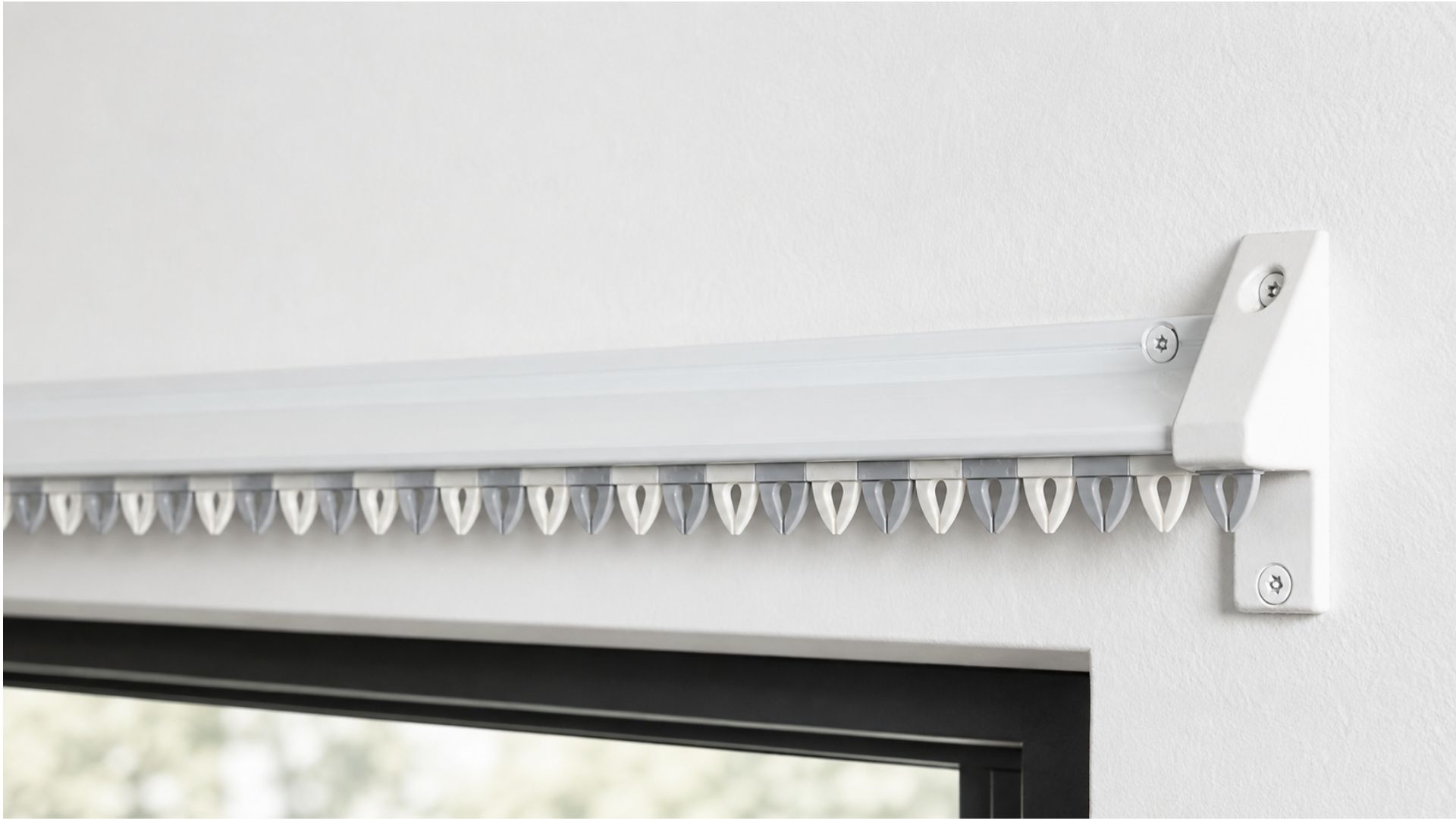
A magnetic load-release track allows the curtain and track to separate from wall or ceiling brackets when abnormal load is applied.
A flexible non-metallic track can provide a similar load-release principle while reducing the amount of rigid metal present within the room.
A fixed reduced-ligature track can remain securely attached while specialist gliders allow the curtain itself to release under load.
This means track selection should take account of more than the required length and layout.
Curtain weight, track material, release method, fixing conditions and potential misuse all influence which system is suitable.
See our Anti-Ligature Curtain Tracks for the available systems and their different release methods.
Anti-Ligature Magnetic Cubicle Tracking
Cubicle tracking creates an additional challenge because the system often projects into the room to form privacy enclosures around beds, examination spaces or other clinical areas.
Where a reduced-ligature solution is required, magnetic cubicle tracking can use load-release connections at the points where the track is supported.
The Kestrel magnetic cubicle system uses magnetic wall and ceiling fixing arrangements to support the track during normal use.
These components are designed to release when excessive load is applied, reducing fixed load-bearing points within the installation.
Track layout still needs careful coordination with the surrounding environment. Ceiling construction, wall fixing positions, suspension points, curtain weight and nearby building services can all affect the finished system.
For system configuration and installation information, see our Anti-Ligature Magnetic Cubicle Tracking.
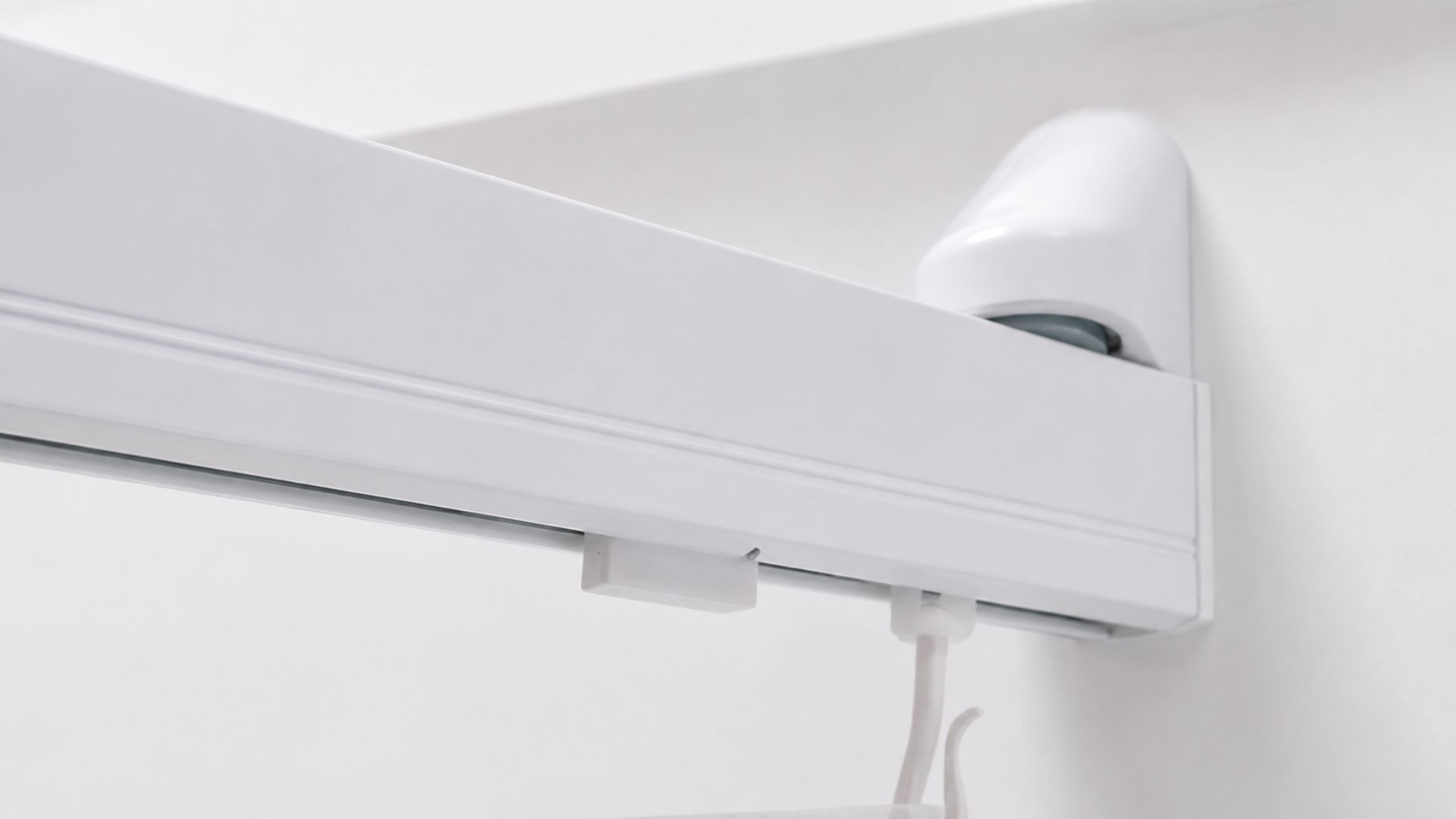
How Do Magnetic Load-Release Systems Work?
Magnetic load-release systems use specially designed magnetic components between the blind or curtain track and the fixed building structure.
During normal use, the magnets provide sufficient holding force to support the blind, track and associated components.
When excessive downward load is applied, the supported component separates from the magnetic fixing point. Depending on the system, this may mean:
- the curtain releases separately while a reduced-ligature track remains fixed
- a suspended section of cubicle track releases from its supports
- the complete blind releases from its brackets
- the curtain and track release together
The system can then be inspected and, where appropriate, reinstated in accordance with the manufacturer’s instructions.
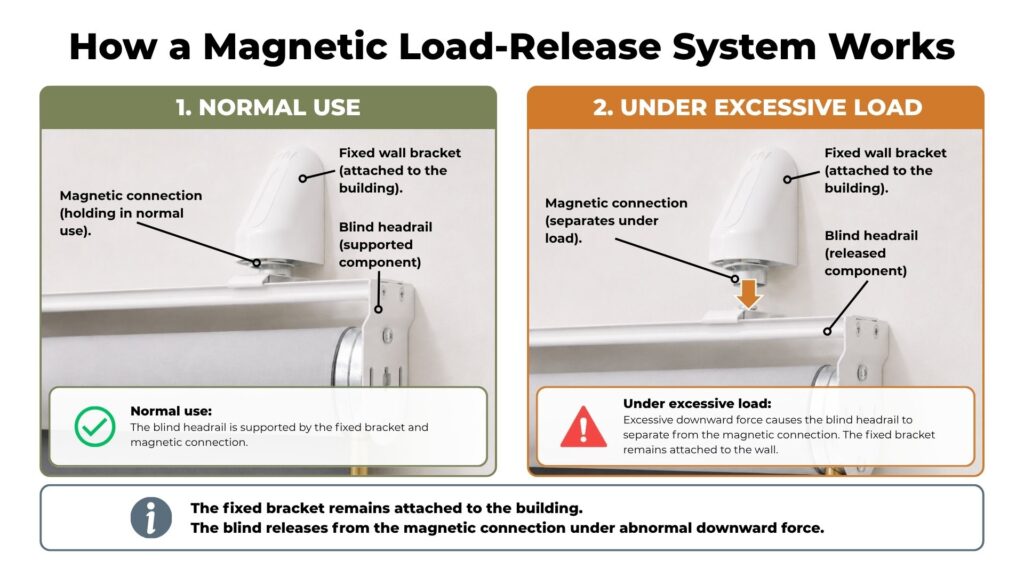
The release mechanism is only one part of the specification. Bracket position and spacing, substrate, product weight and system configuration can all affect performance. Installation, commissioning and ongoing inspection therefore need to follow the requirements of the particular system.
For an overview of the blinds and tracking systems we supply, see our Anti-Ligature Blinds & Curtain Tracking Systems range.
What Guidance Applies to Anti-Ligature Products in Healthcare?
Anti-ligature products need to be selected in the context of the healthcare environment, the people using it and the risks identified for that particular space.
Several NHS Health Building Notes may be relevant depending on the project.
HBN 00-10 Part E: Curtains and Tracking
Health Building Note 00-10 Part E: Curtains and tracking provides NHS guidance for curtain and tracking systems used in healthcare facilities.
The current Part E was published in October 2023 and covers the design, specification, installation and management of curtains and tracking.
This makes it an important reference when specifying privacy curtains, window curtains and associated tracking within healthcare projects.
Mental health facilities have additional design requirements, so Part E should be considered alongside the guidance relevant to the particular mental health environment.
HBN 03-01: Adult Acute Mental Health Units
HBN 03-01 provides guidance on the planning and design of adult acute mental health facilities.
For low and medium secure adult facilities, NHS England also publishes HBN 03-01 Supplement 1, which sets out additional requirements for these environments.
The guidance reinforces the importance of considering ligature risk as part of the design of the whole environment.
Requirements can differ between facilities and between spaces within the same facility, so specification should respond to the project-specific risk assessment.
A blind, curtain track or other individual product should therefore be considered as one part of the wider design and risk-management approach.
What Should You Consider When Selecting Anti-Ligature Products?
Product selection needs to start with the requirements of the space rather than the product itself.
For blinds and curtain tracking, we would normally expect the project team to consider the following areas.
1. Assessed Ligature Risk
Establish how the space is used, who will use it and the level and nature of the identified risk.
This can influence whether a load-release system is required and which components need to be considered.
2. Purpose of the Product
Define what the system needs to achieve.
For example:
- adjustable daylight control
- bed or cubicle screening
- blackout or dim-out
- window curtains
- solar shading
- glare control
- privacy
This helps determine whether a roller blind, vertical blind, curtain track or cubicle tracking system is appropriate.
3. Release Method
Different systems address load in different ways.
The complete blind or track may release from magnetic supports, a suspended component may separate or the curtain may detach from specialist gliders while the track remains fixed.
The selected approach should be appropriate for the room and supported by the relevant manufacturer’s information.
4. Operating Method
Blind controls require particular attention because conventional cords and chains can introduce additional considerations in higher-risk environments.
Depending on the system, alternatives may include wand control, spring operation or detachable controls.
5. Fixing Surface and Building Structure
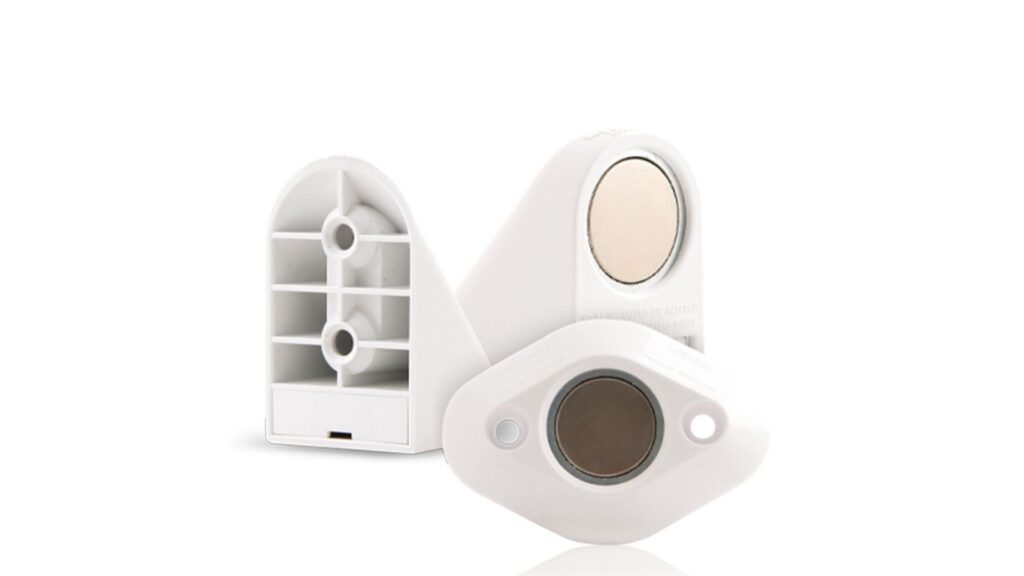
Load-release systems still need secure fixed components.
The installer therefore needs to understand what the brackets are being fixed into, including:
- walls
- solid ceilings
- window recesses
- suspended ceilings
- structural supports
- specialist ceiling systems
Fixing conditions should be considered early, particularly for suspended cubicle tracking.
6. Layout and Coordination
Track routes and blinds can interact with lighting, ventilation, sprinklers, detectors, ceiling grids and other services.
Cubicle tracking may also require bends, suspension points and wall connections to form the required privacy layout.
Coordinating these elements before installation can reduce clashes and late changes on site.
7. Fabric and Curtain Requirements
Fabric selection needs to reflect how the space will be used.
Considerations may include:
- blackout requirements
- flame performance
- light transmission
- infection control
- curtain weight
- durability
- cleaning
- privacy
The weight of the finished curtain can also form part of the track-system specification.
8. Cleaning and Infection Control
Healthcare products need to fit the cleaning regime for the environment.
Curtains, blinds, tracks and operating components should therefore be considered in relation to access for cleaning, fabric maintenance and the replacement or laundering process.
9. Inspection and Reinstatement
A load-release system needs to remain suitable throughout its working life.
The project should establish how the system will be inspected, how released components are reinstated and who is responsible for ongoing checks.
Anti-Ligature Product Specification Checklist
Before specifying a blind or tracking system, check:
- How will the blind be operated?
- How will the system be cleaned?
- Which product type suits the room?
- What fabric performance is required?
- What release mechanism is appropriate?
- Can all relevant components be inspected?
- How will released components be reinstated?
- What are the wall and ceiling fixing conditions?
- Has the ligature risk for the space been assessed?
- What privacy, shading or screening function is required?
- Are there services or ceiling features that affect the installation?
- What manufacturer documentation, testing and maintenance information will be required at handover?
For complex or higher-risk environments, involving the specialist supplier early can help resolve these questions before the specification and surrounding construction are fixed.
Installation and Coordination of Anti-Ligature Blinds and Tracks
Correct installation is particularly important with load-release systems because the performance of the finished system depends on its components, fixing arrangement and configuration.
A site survey can establish dimensions, fixing surfaces, ceiling construction, track routes and access requirements before manufacture or installation begins.
For cubicle tracking, coordination can be more involved because the track may need to span open areas and connect with both walls and ceilings.
The locations of suspension points and magnetic connections therefore need to be planned around the room layout and surrounding building services.
Healthcare projects can also introduce practical site constraints. Installation may need to take place within an operational facility, with restricted access, controlled working areas or coordination around clinical activity.
We work with project teams from specification and survey through to installation, allowing the shading or tracking system to be coordinated with the wider room design rather than considered once other elements are already complete.
Once installed, the relevant load-release components should be checked and the system commissioned in accordance with the product and manufacturer’s requirements.
Handover information should also explain how the system operates, how it should be reinstated following a release and what ongoing checks are required.
Inspection, Maintenance and Reinstatement
Anti-ligature and load-release products need ongoing management after installation.
Inspection should look for damage, missing components, incorrect reinstatement or changes to the surrounding environment that could affect the intended operation of the system.
For magnetic systems, this can include checking that:
- curtains or other supported components remain suitable for the system
- the blind or track has been correctly reinstated following a release
- magnetic brackets and connections remain correctly positioned
- components have not been substituted or altered
- the system remains free from damage
- fixings remain secure
If a component releases, it should be inspected before being returned to use and reinstated in accordance with the manufacturer’s instructions.
The frequency and method of inspection should follow the requirements of the healthcare provider, relevant guidance and the manufacturer rather than relying on a single generic maintenance interval.
Clear records of inspection, maintenance, testing and replacement can also help estates teams manage systems consistently across a healthcare facility.
Experience Working in Healthcare Environments
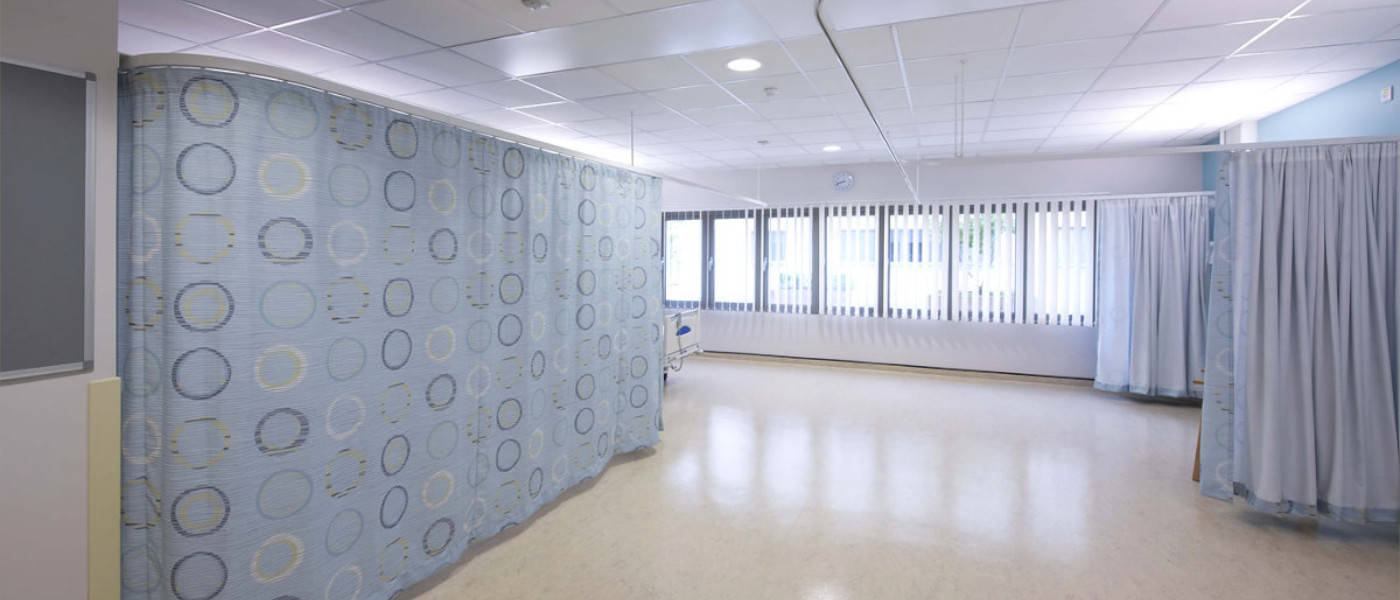
Healthcare projects often involve more than product selection. Access, infection control, privacy, existing services and live-site working can all influence how shading and tracking systems are specified and installed.
Our work at North Middlesex University Hospital is one example of our experience delivering systems within a major healthcare environment as part of a wider modernisation project.
How We Support Healthcare Projects
We work with architects, contractors, estates teams and healthcare organisations on projects ranging from individual replacements to larger refurbishment and new-build schemes.
Our involvement can include:
- reviewing project requirements and suitable system types
- installation in operational healthcare environments
- coordinating fixing and installation requirements
- ongoing technical and maintenance support
- bespoke track and blind configurations
- commissioning and handover
- product and fabric selection
- site surveys
Where a project includes an identified ligature risk, we can advise on the anti-ligature blind and tracking systems within our range, and provide the relevant product information for the curtain and tracking project team to assess.
You can view our full range of Anti-Ligature Blinds & Curtain Tracking Systems, including roller blinds, vertical blinds, curtain tracks and magnetic cubicle tracking.
Planning an Anti-Ligature Project?
We’ll respond within 48 hours with tailored specification support.
Frequently Asked Questions About Anti-Ligature Products
What is an anti-ligature product?
An anti-ligature product is designed to reduce opportunities for a person to attach a ligature to a fixture, fitting or component.
Depending on the product, this may involve magnetic or load-release connections, reduced projections, enclosed fixings, specialist operating methods or other design features.
Product selection should form part of the wider risk assessment for the healthcare environment.
Where are anti-ligature products used?
They are commonly considered in mental health and other healthcare environments where a ligature risk has been identified.
The requirements can differ between rooms and facilities depending on the patient group, level of supervision, use of the space and assessed risk.
How do anti-ligature blinds work?
Anti-ligature blinds can use specialist operating systems and load-release components designed to reduce potential ligature points.
For example, a blind may be supported by magnetic brackets that release when excessive downward force is applied.
The exact operation depends on the blind system and selected control method.
What is an anti-ligature curtain track?
An anti-ligature curtain track is designed to reduce the risk associated with conventional fixed curtain tracking.
Depending on the system, the track may release from magnetic supports under excessive load, or the curtain itself may release from specialist gliders while the track remains fixed.
What is magnetic cubicle tracking?
Magnetic cubicle tracking uses load-release magnetic connections at the points supporting the track.
The system remains in position during normal use but is designed to separate from its supports when excessive force is applied. This allows cubicle privacy layouts to be created while addressing an identified ligature risk.
Does an anti-ligature product make a room compliant?
The suitability of a healthcare environment cannot be determined by one product alone.
Anti-ligature products should be selected as part of the wider project risk assessment, with consideration given to the room, patient group, surrounding fixtures, installation and ongoing management.
Relevant NHS guidance and manufacturer information should also be considered.
What guidance applies to anti-ligature blinds and curtain tracking?
The applicable guidance depends on the healthcare setting.
NHS Health Building Note 00-10 Part E covers curtains and tracking in healthcare environments, while mental health facilities may also need to consider HBN 03-01 and other relevant NHS guidance.
The project team should identify which guidance applies to the particular facility and space.
Do anti-ligature blinds and tracks need maintenance?
Yes. Load-release systems should remain accessible for inspection and should be checked for damage, incorrect reinstatement, altered components or changes that could affect their operation.
Inspection and maintenance should follow the manufacturer’s instructions, the healthcare provider’s procedures and any applicable project guidance.
For enquiries about anti-ligature products:
Enviroscreen Systems
Swift House,
13 Ronsons Way,
St Albans,
AL4 9QT
United Kingdom
Telephone: 01727 220 007
E-mail: info@enviroscreen.org.uk