Disposable vs Reusable Curtains for Healthcare
The debate over whether to use disposable or washable curtains in a healthcare setting has been a dilemma for hospital and GP surgery purchasers for years.
But now there is a new solution, which can save thousands in waste, facilities and laundry costs.
Even though there have been continuous advances in medical hygiene as our knowledge and experience of infection control improves, there still seems to be a problem in the healthcare industry with cubicle curtains being infected with multiple strains of bacteria and viruses.
Research by the University of Manitoba in Canada recorded the contamination of curtains at a hospital and the findings were published in the American Journal of Infection Control.
According to the study’s lead author, privacy curtains pose a high risk of cross-contamination because they are frequently touched but infrequently changed. They can also become a breeding ground for MRSA and other dangerous bugs.
Experts encourage hospitals to clean or replace their curtains regularly to mitigate the spread of infection. Recently, healthcare providers have switched from reusable fabric to disposable curtains in all areas.
This shift has seen a reduction in the spread of infection and is endorsed as an overall cost-saving measure when laundry costs are considered.
Nevertheless, because of the pandemic, a problem has arisen with disposable curtains that is unsustainable and still costly for hospitals and GP surgeries.
With a fall in bed availability and an increase in patient numbers, there is a need for a cost-effective and sustainable solution for curtains and cubicle tracking systems.
Disposable Curtains
Concerns over infection control have led to the increase of disposable curtain usage. However, they are only really effective if changed regularly and, in some cases, after every patient.
There is most definitely an initial cost saving, but with an ongoing and potentially increasing cost to replacing these curtains, it can be argued that they are not as cost-effective over the long term as reusable options.
Over recent months, there has been an increased use of disposable curtains and therefore an increase in hospital waste. Although many manufacturers offer recyclable products, most end up in general or clinical waste, which increases disposal costs.
A disposable curtain could hang for a few months, but as the study referenced above has shown, within weeks the curtains could harbour superbugs and viruses transferred by visitors, staff and patients.
For them to be effective at infection control, they have to be changed frequently.
This means reusable curtains could be a better option financially and even hygienically.
Washable Curtains
Reusable and washable curtains provide benefits to a clinical environment.
They can improve patient comfort, reduce long-term costs, decrease waste and provide a more sustainable option than single-use disposable curtains.
Good quality reusable curtains can last up to 10 years, although some staining cannot be washed out. The ongoing costs associated with washable curtains depend on the policy of the individual facility.
The cost of laundering fabric curtains can be greater than the expense of disposable options when employee time is taken into account.
Information provided by suppliers will give the pros and cons of each type of curtain used in healthcare, but hospitals and GP surgeries have moved towards the wider adoption of disposable curtains from a general consensus that they are the better of the two options.
When comparing lifetime cost, the most effective product relies on the frequency of washing reusable curtains and the rate at which disposables are replaced.
The uncertain nature of how long each curtain will last due to infection rates, new viruses, handling and staining is difficult to quantify.
With an ongoing pandemic, a new solution is imperative at this time.
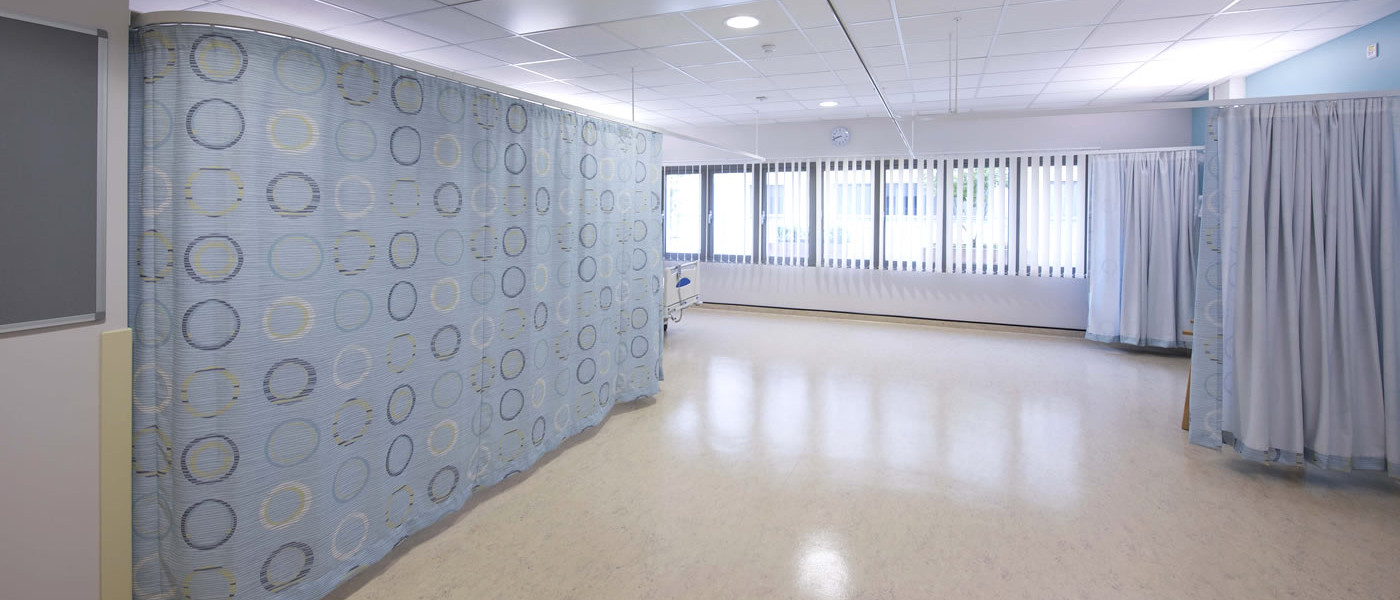
The New Alternative to Disposable and Reusable Fabric Curtains
A cubicle curtain that offers a long lifetime to substantially reduce disposal costs and can be cleaned in-situ to eliminate laundering expense would be the ultimate solution.
Stericurtain is the ideal alternative.
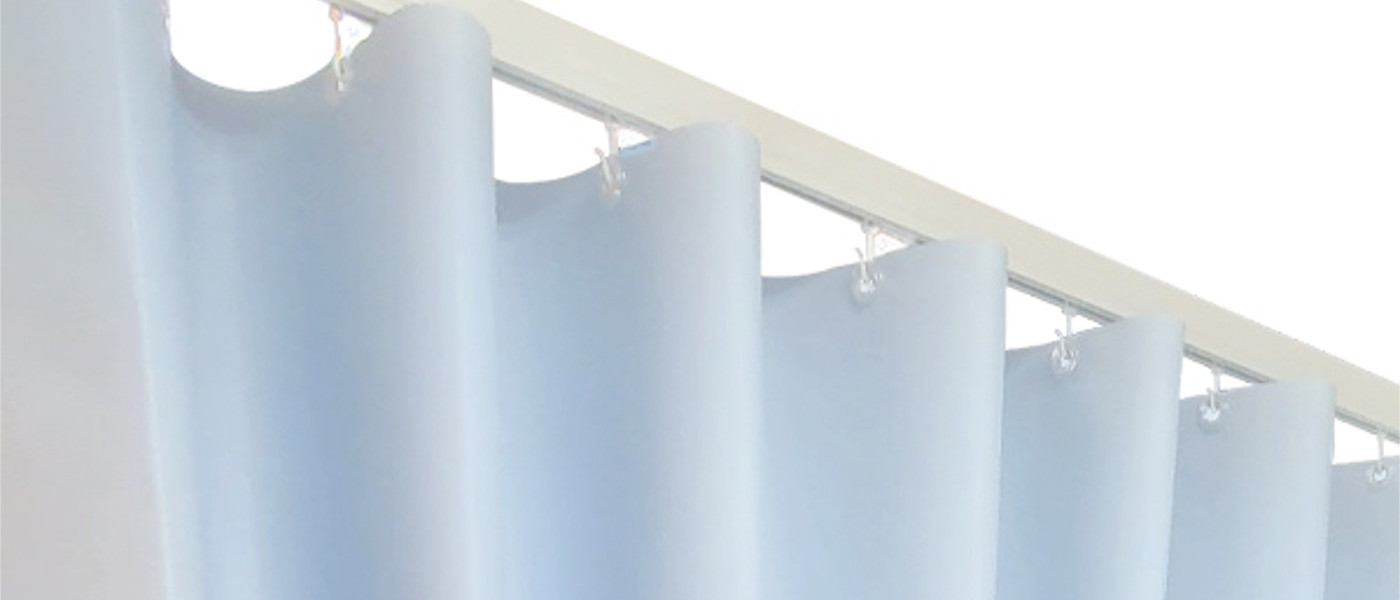
Stericurtain is a reusable, PVC-coated polyester curtain that has anti-microbial properties and a wipe-clean surface.
Unlike other rigid PVC fabrics, Stericurtain has more flexibility to drape like a conventional curtain. Bodily fluid spills can be cleaned immediately using a detergent, unlike other absorbent fabrics.
This alternative is a far more cost-effective and sustainable option than disposable or washable fabric curtains, saving hospitals thousands of pounds in waste, facilities and laundry costs.
During an infection pandemic, disposable curtains may be changed after every patient. You could be benefiting from a 76% reduction in curtain costs by switching to Stericurtain.
Sanitisation as part of a regular bed cleaning routine ensures that the curtain is germ-free after every patient.
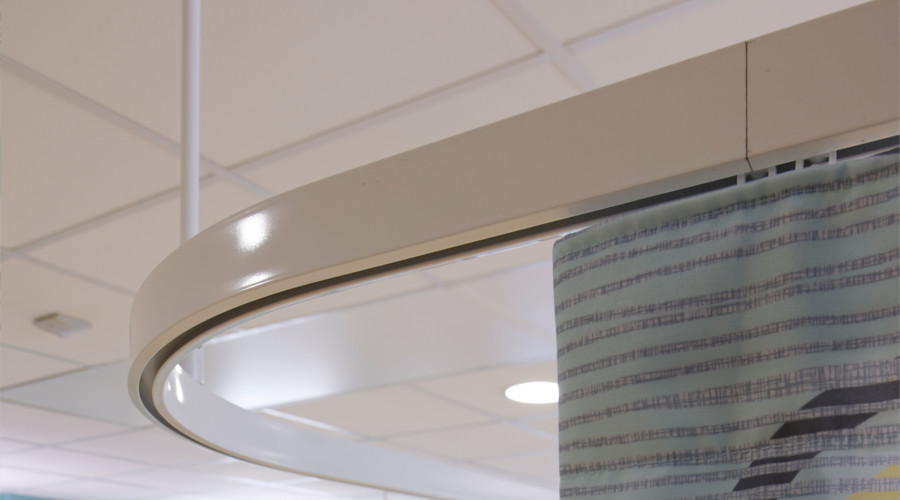
They will not tear or stain and will fit to any existing cubicle track glider hook or roller hook by simply attaching the hooks through the plastic eyelets.
Available as standard in 3 widths:
- 7m
- 5m
- 3m
Each standard curtain has a 2m drop. Made-to-measure options are also available.
They are manufactured on site in the UK for fast order turnaround.
Benefits of using Stericurtain include:
- Overall cost saving compared to machine washable and disposable curtains
- Saves time on replacing curtains regularly
- Reduces the need to incinerate disposable curtains
- Saves laundry costs and time compared with machine washable curtains
- Reduces reliance on long delivery lead times
- Can be installed and used for many years
- Can be cleaned using standard cleaning procedures and chemicals already used for surfaces in healthcare settings
- Flame retardant, conforming to BS5867 Part 2 Type C for hospitals and healthcare environments
- Biosafe® accredited
The Innovative New Normal for Hospital Wards
There will be many advances in technology and processes over the coming months and years in healthcare facilities and hospitals.
The changing nature of the pandemic has put a strain on the entire health system globally.
One small but crucial change to equip frontline caregivers can make a major impact on their time and efficiency.
Cubicle curtains may be a minor concern right now, but this is the time to improve the services and products that were more traditionally used.
That is where the Barrierscreen comes in.
Barrierscreen has all the benefits of Stericurtain, but also has a split vision roll-up panel. This gives the patient a choice of being in full view, partial view or complete privacy whilst they are recuperating.
The two panels are easily rolled up and secured with a plastic popper to reveal a clear-view inner panel. versatile solution that meets the demands of modern living and working spaces.
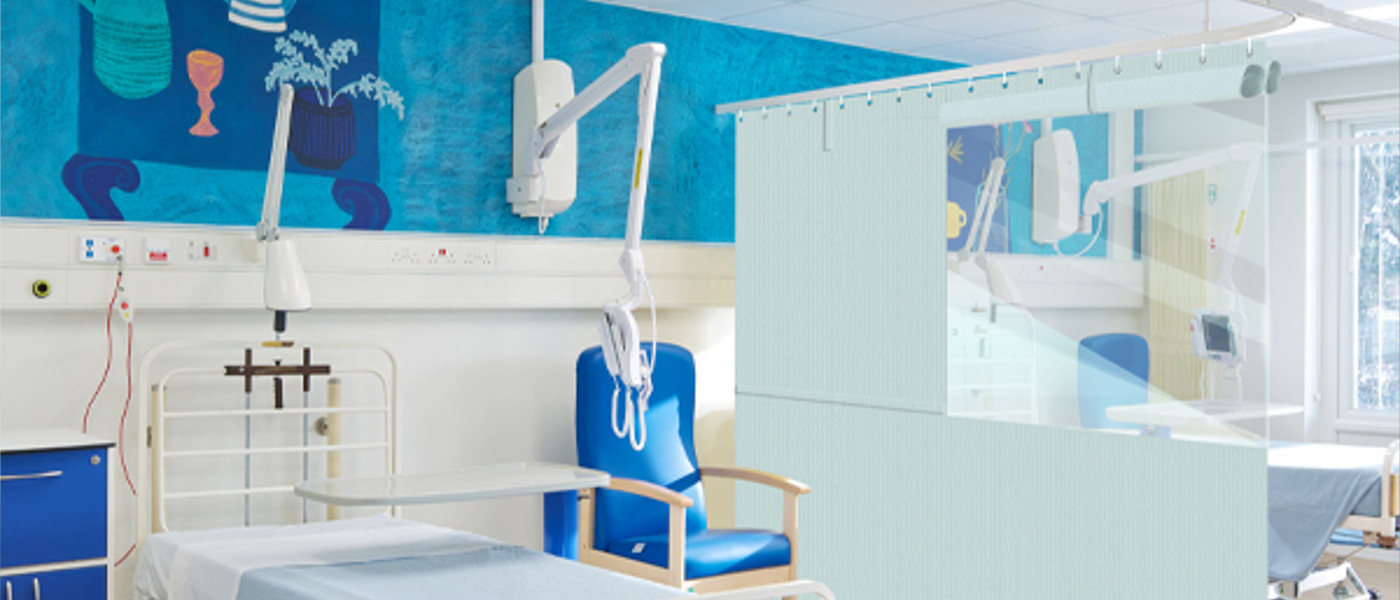
The clear-view panel allows for complete visibility across the ward, giving a visual connection between staff and patients while still maintaining a protective barrier.
Barrierscreen is manufactured from 4-ply PVC fabric, which will not tear or stain and has a lifetime guarantee.
It is made using quality components and fabric tested for superior strength and hygiene properties.
Benefits of switching to Barrierscreen cubicle curtains include:
- Infection control: Maintains patient privacy while keeping a protective barrier in place, helping social distancing between beds
- Patient privacy: Barrierscreen has a split vision roll-up panel
- Easy to clean: Can be wiped down in-situ with detergent as part of a routine bed cleaning process when a patient leaves
- Unobtrusive: Unlike freestanding screens, the curtain does not become an obstacle or get in the way of staff and nurses
- Simple to hang: Fits to any existing cubicle track glider hooks or roller hooks
- Significant cost savings: No disposal, facilities or laundry service costs
- Sustainable: A more environmentally preferable choice than single-use disposable curtains
- Available in 14 colours
- Standard size: 2.1m length by 2m drop
- Made-to-measure options available
- Anti-bacterial
- Will not tear or stain
- Resistant to mould and mildew
- Biosafe® accredited
- Greenguard certified for low chemical emissions
- Flame retardant, conforming to BS5867 Part 2 Type B
FAQ
For Enquiries About Hospital Curtain Solutions:
Enviroscreen Systems
Swift House,
13 Ronsons Way,
St Albans,
AL4 9QT
United Kingdom
Telephone: 01727 220 007
E-mail: info@enviroscreen.org.uk